The House of Representatives' backing could remove a major internal objection to Ankara's 2019 maritime memorandum. Disputes with Greece remain unresolved, while energy projects still depend on separate licensing and operational decisions.
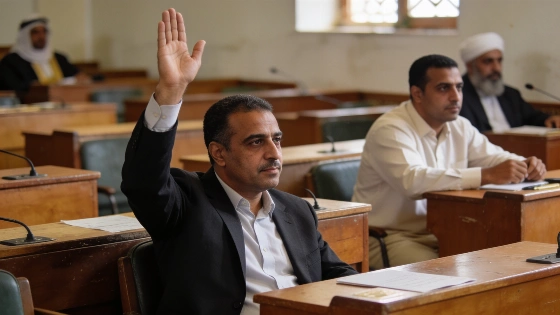
The 2019 memorandum was signed by Libya's internationally recognized government in Tripoli as forces loyal to Khalifa Haftar fought to capture the capital. On Oct. 20, 2026, the eastern-based House of Representatives in Benghazi unanimously approved the agreement with Türkiye, revoked Resolution No. 1 of 2020 rejecting the Turkish-Libyan memorandums and overturned its decision to sever political ties with Ankara.
The reversal changes the agreement's standing inside Libya. It could also strengthen Türkiye's position in a dispute that reaches beyond the country's divided institutions. House member Aisha al-Tabalqi said the agreement was approved after specialized committees presented lawmakers with a detailed explanation of its provisions.
A reversal with limits
The House had previously opposed the maritime agreement and questioned whether the Tripoli government could conclude it without parliamentary approval. Its latest decision may remove one of the most significant domestic objections to the memorandum. It does not settle questions about implementation or determine how the agreement affects other countries.
The memorandum was signed in Istanbul on Nov. 27, 2019, by Türkiye and Libya's then internationally recognized Government of National Accord, led by Fayez al-Sarraj. It defines maritime jurisdiction areas, including the countries' continental shelves and exclusive economic zones in the Mediterranean. Türkiye later approved the document in its parliament, and the United Nations registered it on Sept. 30, 2020. UN registration records the submission of the agreement; it does not itself establish acceptance of the delimitation by third countries.
The eastern parliament's vote also reverses its 2020 position on political ties with Ankara. The approval adds support from an eastern Libyan institution associated with Haftar's political camp to the backing the memorandum received from the former Tripoli government.
Greece's challenge remains
Ankara argues that its long Mediterranean coastline should not be restricted disproportionately by nearby Greek islands. Greece says the agreement disregards the maritime entitlements of islands including Crete and Rhodes. The two countries therefore maintain opposing interpretations of how coastal geography should shape maritime boundaries.
Greece and Egypt signed their own maritime delimitation agreement in August 2020. Some areas overlap with the claims advanced by Türkiye and Libya. On Oct. 20, 2026, Athens rejected the eastern parliament's approval and said the deal had no legal effect, Reuters reported. The European Council had also stated in June 2025 that the memorandum infringes on the sovereign rights of third countries, does not comply with the international law of the sea and cannot produce legal consequences for them.
Athens has also pursued contacts with Libyan officials: in September 2025, it reiterated that the memorandum was invalid during talks with them. In December, Greek Parliament Speaker Nikitas Kaklamanis called for its cancellation during discussions with Aguila Saleh. Libya's parliament condemned that demand as interference in sovereign affairs.
Eastern parliamentarians' endorsement may weaken arguments that the memorandum lacks support from Libya's eastern institutions. It does not resolve the disagreement between Athens and Ankara or the competing maritime claims.
Energy ties have a commercial track
Türkiye and Libya have already moved toward offshore work. In June 2025, Turkish Petroleum Corporation (TPAO) and Libya's National Oil Corporation (NOC) signed a memorandum covering geological and geophysical studies in four offshore areas. Discussions also covered a two-dimensional seismic survey spanning approximately 10,000 kilometers.
In February 2026, TPAO secured interests in two blocks during Libya's first oil and gas licensing round in 17 years. Spain's Repsol joined TPAO in the onshore C3 block. The offshore O7 award went to a consortium that included TPAO and Repsol; Hungary's MOL was also part of it. The parliamentary vote adds domestic political support for the memorandum, while licensing and operational decisions remain separate steps. Libya's broader energy investment push has also drawn attention to the commercial context.
Ankara has built ties across Libya's divide
Türkiye backed the Tripoli government during Haftar's 2019-2020 offensive, but Ankara later expanded contacts in the east while maintaining its relationship with the western authorities. President Recep Tayyip Erdogan met Aguila Saleh in 2022 and 2023. In August 2025, Turkish intelligence chief Ibrahim Kalin visited Benghazi for talks with Haftar.
The contacts continued on June 23, 2026, when Kalin met Saddam Haftar in Benghazi. Their discussions covered maintaining peace and unifying rival administrations and military forces, alongside expanding bilateral cooperation. Foreign Minister Hakan Fidan also engaged eastern Libyan officials.
Egypt remains part of the diplomatic equation. Cairo has close ties with eastern Libya and signed the maritime agreement with Greece. Ankara and Cairo have meanwhile improved relations after years of regional rivalry, giving both governments more room for engagement on Libya and Mediterranean issues. The eastern parliament's vote does not by itself signal a break between Libya's eastern leadership and Egypt.
Formal steps remain ahead
The decision's immediate effect is political: an institution that had challenged the 2019 memorandum has endorsed it. The next steps depend on formal publication and implementation, as well as the positions taken by Libya's rival authorities and other Eastern Mediterranean countries.
The parliamentary statement issued on Tuesday is the reported confirmation of the reversal; publication and implementation remain the next formal steps.