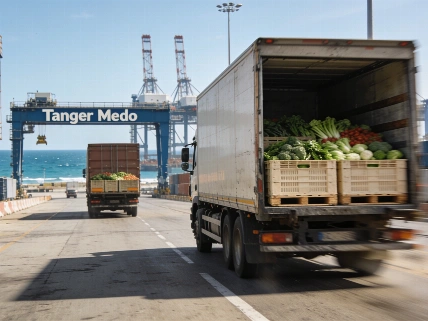
A proposed India-Egypt trade pact could widen access for engineering, chemical and digital infrastructure exporters. Payment problems, customs costs and approval rules remain obstacles, while negotiations had not begun at the time of the reported update.
Bilateral merchandise trade reached about $6.5 billion in FY26, up 35%. But exporters say payment difficulties and market-entry costs could blunt the gains from any tariff concessions.
India and Egypt have set a $12 billion trade target. India's merchandise exports to Egypt rose 13.6% to $3.9 billion in FY26, then climbed 67.4% to $2.4 billion in the first five months of FY27, according to data shared by the Engineering Export Promotion Council of India (EEPC India). The Department of Commerce's TradeStat system provides country-wise export records from January 2018 onward, with revised final data through March 2026 and final data through September 2026.
Payment security matters alongside tariffs
The commerce ministry said negotiations were expected to begin within 90 days of Commerce and Industry Minister Piyush Goyal's visit to Egypt. Talks had not begun at the time of the reported update. A joint working group was to examine the framework and terms of reference for a possible Preferential Trade Agreement, Free Trade Agreement or Comprehensive Economic Partnership Agreement.
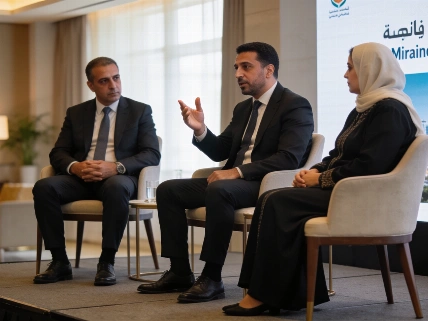
For smaller exporters, the terms of trade matter as much as the headline target. Pankaj Chadha, chairman of EEPC India, said more than 60% of its members are MSMEs and identified payment security and simpler regulation as priorities. He also cited foreign-exchange shortages in Egypt, which can leave buyers short of US dollars to pay after goods have shipped. Rupee-based settlement could be considered, he said, though the problem had not been fully resolved.
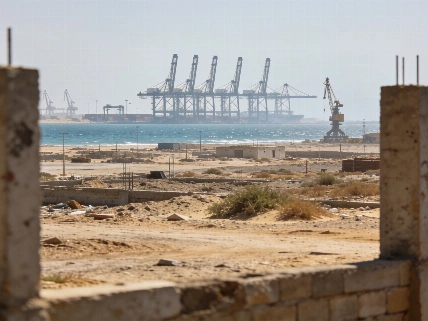
A tariff cut alone would not ease working-capital pressure or shorten lengthy approval processes. Freight costs and customs procedures can also make it harder for smaller firms to supply equipment for factories and infrastructure projects.
Export growth meets sector-specific hurdles
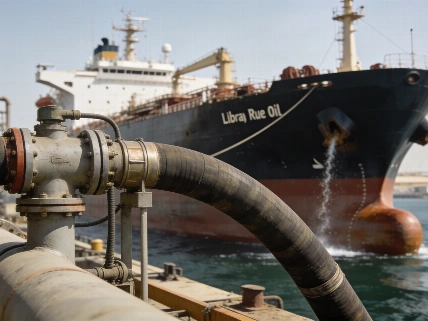
Engineering exports to Egypt grew from $761.3 million in FY24 to $990 million in FY26, according to EEPC India. In the first half of FY27, they rose more than 50% to $722 million from $470.8 million a year earlier. The Department of Commerce's monthly TradeStat database also classifies exports by Harmonised System commodity codes, allowing product-level tracking across engineering goods and machinery, as well as electrical and transport equipment. Roger Kumar, founder and managing director of CASE Group, identified industrial equipment and pollution-control technology as possible opportunities. He estimated these segments could support at least $100 million in annual exports if financing and after-sales support are competitive.
Chemical exporters face a tariff disadvantage against suppliers from the European Union, Turkey and Arab countries, said Satish Wagh, chairman of the Basic Chemicals, Cosmetics and Dyes Export Promotion Council. He also pointed to advance cargo information registration, factory and product approvals, and the costs of payment settlement. Mutual recognition of standards and rupee-pound settlement could support the bilateral trade target, he said.
Pharmaceutical exports to Egypt rose 23.47% to $132.89 million during April-October FY27, according to the Pharmaceuticals Export Promotion Council of India. Vaccine exports increased 146.14%, while drug formulations and biologicals rose 59.02%. Namit Joshi, chairman of Pharmexcil, called for attention to reliance-based approvals, recognition of Indian Good Manufacturing Practices certifications and import procedures. He said those changes could encourage joint ventures and manufacturing partnerships.
Textile exporters see stronger prospects for cotton yarn and fabrics than for finished garments, where Egypt already has an established manufacturing base. Sanjay K. Jain, chairman of the National Textiles Committee of the Indian Chamber of Commerce, said lower import duties could help Indian cotton yarn compete with suppliers from Turkey and Uzbekistan. Vikas Singh Chauhan, director of the Home Textile Welfare Association, pointed to freight costs and called for simpler customs and conformity procedures.
Infrastructure opportunities depend on execution
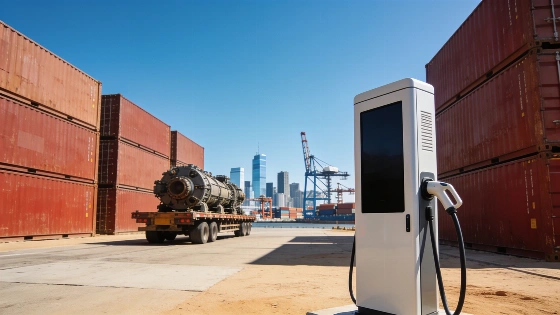
Lower duties on charging equipment and power electronics could reduce deployment costs for Egyptian charging networks, said Akshit Bansal, founder and chief executive of Statiq. He identified local assembly and technology partnerships as possible starting points. Before expanding, companies would need to assess local demand and policy support.
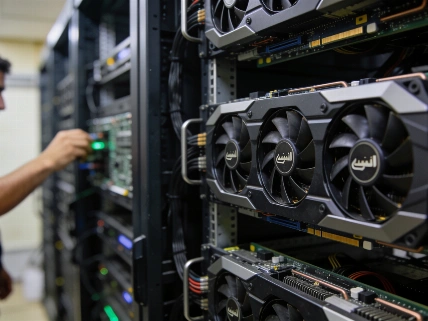
Digital infrastructure could also figure in the relationship. Karan Jaju, co-founder of CloudPe, cited Egypt's plan for a sovereign artificial-intelligence data centre with an initial capacity of 20 MW, scalable to 200 MW. Providers would need to address data protection and cybersecurity requirements, he said. Goyal's Cairo discussions also included startup cooperation on health technology, as an earlier report described.
Rajata Mehra, convenor of the CII Policy Advocacy Panel and director of MSME Rajat Chemical Industry, said preferential tariffs alone would not resolve competition from China. Indian firms would also need competitive pricing, financing and reliable delivery. The reported update says negotiations had not begun and gives no later status for the working group. India's Department of Commerce maintains country-wise export data and a commodity-level database covering monthly trade records from January 2018.