

Morocco and Egypt help UK retailers diversify fresh produce sourcing as climate and logistical pressures threaten supply. Their exporters rely on complementary seasons and established routes while facing water stress and regulatory change.
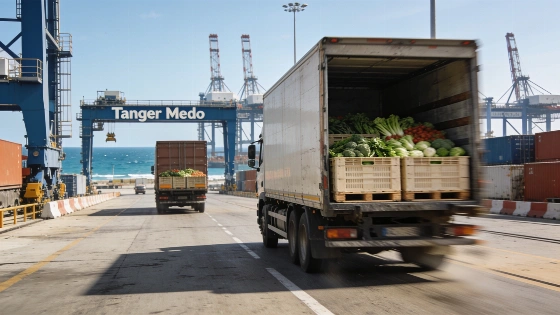
At peak times, Tanger Med handles 700 trucks of fresh produce a day. Scanners clear each load in less than two hours before the short crossing to southern Spain. The port is a key route for Moroccan exporters supplying the UK.
More than 80 per cent of Morocco's fresh fruit and vegetable exports pass through Tanger Med. The report says volumes are targeted to exceed 130,000 trucks in 2026.
Routes and seasons support supply
For UK retailers, Morocco and Egypt offer complementary production seasons and established export infrastructure. Diversifying international sourcing can help keep supermarket shelves stocked in the short term as climate and logistical pressures disrupt supply.
Egyptian exporter Gadco's Ibrahim Gad pointed to regular shipping routes to Felixstowe and Tilbury, along with London Gateway. He said the UK could depend on "a continuous and uninterrupted supply chain whether via air or sea," citing Egypt's cold-chain infrastructure and packhouses.
Egypt's Central Laboratory for Residue Analysis of Pesticides and Heavy Metals in Food (QCAP), supported by the Ministry of Agriculture, helps exporters monitor pesticide residues and meet market requirements. Gad said UK exports of grapes, oranges, lemons and strawberries had grown in recent years, backed by quality, competitive prices and preferential tariffs.
Morocco's Nadorcott and SweetCott mandarins compete at the premium end of the market as citrus exporters face pressure from falling prices. In this category, some Egyptian exporters have turned to European markets, including the UK, after competition from China and difficulties reaching Russia.
Water pressure and market fit
Both origins face climate and commercial challenges. Morocco experienced seven years of drought before last winter brought its wettest conditions for decades, causing quality issues in products including tomatoes. The rain also replenished reservoirs.
At Delassus, Fatiha Charrat said the producer uses drip irrigation and has invested in renewable energy to power irrigation. The company is working to improve productivity per unit of water. "For me, this is probably the biggest transformation agriculture has to make: water has to be treated as a highly strategic resource," she said.
Morocco's water pressures also feature in coverage of water cooperation. Céline Montauriol of Azura, a founding member of the Morocco Agribusiness Water Coalition, said the organisation was developing a national action plan on water. She pointed to the challenge of building resilience while persuading companies to keep investing in sustainability.
Egypt and Morocco compete in some produce categories, but Egyptian exporter Daltex's Hesham El Naggar argued that citrus suppliers should focus on growing the overall market rather than pushing fruit out when quality from other origins is stronger. He said Morocco had an advantage in mandarins because of its coastal growing areas, while Egyptian oranges were sweeter.
UK negotiations on a new sanitary and phytosanitary agreement with the EU could bring regulatory changes for exporters. Charrat said the UK-Morocco Association Agreement operates independently of the EU-UK relationship, while closer UK alignment with EU rules could affect third-country suppliers. She said Delassus already meets the standards required by UK retailers.







