Libya's Planning Ministry says a committee is weighing fuel subsidy changes and four cash-transfer models. The options remain undisclosed as officials assess how to protect purchasing power and deliver payments amid public distrust.
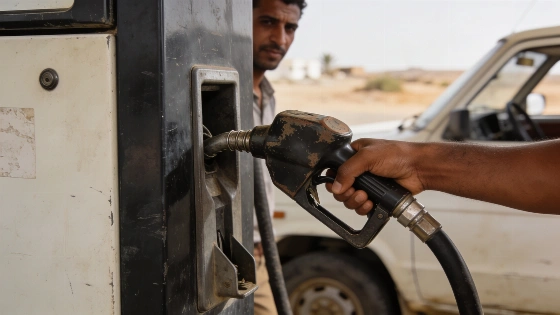
Fuel subsidy reform in Libya is tied to a price gap that has made cross-border smuggling lucrative and hard for authorities to contain. Any replacement payments would also have to reach households reliably. The International Energy Agency says Libya produces only about one-third of the fuel it consumes and spends around US$1 billion a month on imports. Limited storage capacity leaves supply vulnerable to tanker delays. A drone strike on the Zawiya refinery added to the country's fuel-supply pressures.
Libya's Ministry of Planning reported that the Minister of Planning met a committee established under Ministerial Decree No. (194) of 2026. The committee is tasked with developing a subsidy reform plan. The meeting reviewed its progress and options for protecting citizens' purchasing power.
Four cash-transfer models remain undisclosed
The ministry said participants discussed four possible models for distributing cash transfers, but did not identify them. They also considered technical and operational questions, including how allocations would be calculated and paid, as the committee works toward a comprehensive plan.
In April 2024, Abdel Hamid Aldabaiba proposed three approaches. One would deposit direct payments into citizens' bank accounts, with amounts based on estimated average fuel use. Another would raise salaries by an estimated average fuel-consumption amount. His third proposal would give each citizen a subsidised fuel quota through a preloaded card, with additional fuel sold at the full international price.
Parliamentary discussion has also focused on how to target support. On 3 November 2026, House of Representatives Speaker Abdel-Nabi called for a comprehensive study of fuel subsidies and ways to ensure their benefits reach eligible Libyan citizens. He said a proposed mechanism should distinguish citizens from other users, including foreigners and commercial users. In a separate statement reported in November, the House said a move from commodity subsidies to cash support would not mean their immediate abolition or replacement. Studies and safeguards must come first to protect citizens' rights and living standards while preserving economic stability. The Libya News Agency reported the Speaker's call for a study on regulating fuel subsidies.
Payment reliability is a political constraint
Libya has repeatedly debated subsidy reform without implementing fuel changes, amid concern that the public would resist losing a benefit viewed by many as a return on oil wealth. The source account says regular cash shortages at banks feed doubts that authorities could deliver replacement payments. It also describes public frustration with weak services and limited trust in the ruling elite.
Earlier subsidy changes offer some precedent. Food subsidies covering items such as rice and cooking oil were removed toward the end of the Qaddafi era. The government of Abdel Hamid Aldabaiba has introduced prepaid electricity and water meters in some wealthier urban centres. The source describes those measures as a partial return to paying for what households consume.
The cost of fuel imports also affects oil revenue flows. The National Oil Corporation reported that US$3.12 billion was transferred to Libya's sovereign account at the Libyan Foreign Bank in October 2026, compared with US$2.86 billion in September. Fuel-import bills were deducted before the remaining balance was transferred to the Central Bank of Libya under a mechanism involving fuel-import credits and bank guarantees pursuant to Cabinet Resolution No. 525 of 2026.
The cash-transfer question sits within wider debates over public resources and investment, including the agenda discussed in Libya-Russia cooperation talks. The committee's immediate task is to define a workable plan. The ministry has not disclosed the four models.