Morocco projects an 11% rise in date production during the 2026-2027 campaign. The forecast comes as officials point to the crop's importance for oasis incomes and efforts to limit rural exodus.
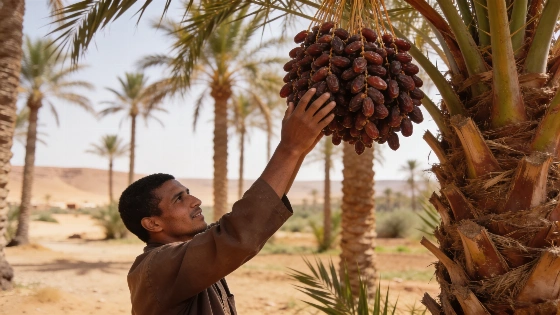
Draa-Tafilalet holds about 6.49 million date palms across 56,000 hectares and more than 225 varieties, making it the country's primary production hub. The region accounts for 83% of national output.
At the opening of the 15th International Dates Fair (SIDATTES) in Erfoud on October 28, Agriculture Minister Khalid Hatimy said national production was expected to reach approximately 180,000 tonnes in the 2026-2027 agricultural season. Other coverage of the announcement put the forecast at 177,000 tonnes, an 11% increase over the previous season. The 177,000-tonne forecast was attributed to improved weather and newly planted areas entering production.
Domestic consumption is estimated at 200,000 to 250,000 tonnes a year. Hatimy said Morocco produced about 170,000 tonnes, and called for closer management of imports by volume and country of origin while maintaining reasonable prices for consumers and helping Moroccan producers reach international markets. He also cited the need to improve storage and processing.
Oasis livelihoods depend on date cultivation
Date production generates more than 3 billion dirhams in value added and provides over 3.4 million working days annually. For some oasis households, it supplies up to 60% of agricultural income and helps reduce rural exodus while combating desertification.
Draa-Tafilalet covers 56,000 hectares of palms and exported 1,510 tons of dates in 2026. Souss-Massa and Oriental each account for about 7.5% of national production. The export figures add an agricultural dimension to Morocco's trade profile, alongside port investment examined in Maghreb Insider's Tanger Med coverage.
The 15th fair brought together 230 exhibitors, including producers and cooperatives, along with researchers, investors and agricultural institutions. Organizers presented the event as a platform for partnerships and investment in the sector.
Seedlings and water works support production
The National In Vitro Culture Laboratory at the National Institute of Agronomic Research (INRA) in Errachidia produces genetically selected seedlings to counter Bayoud disease. Hydro-melioration works in the Ziz river basin and Tafilalet plain have cost approximately 179.94 million dirhams since 2020, covering 28,000 hectares and 540 ksours.
The Sustainable Oasis Environment Management Project (PROGEDOM) runs through 2027 with a budget of 164 million dirhams. This includes a 121 million dirham World Bank PROGREEN grant intended to support 37,000 residents in Errachidia and Tata provinces.
A separate 2021-2030 programme to intensify and rehabilitate Draa-Tafilalet oases has a budget of 792 million dirhams. So far, 917,051 of its planned 2.6 million seedlings have been distributed. The Green Generation 2020-2030 strategy sets a target of 300,000 tonnes of dates annually by 2030 and prioritizes modernization of the industry, including improved irrigation, production techniques and cooperative support. Officials attributed the 2026-2027 production increase to improved climatic conditions and expanded cultivated areas.