

The Tadla launch follows a cereal harvest of about 90 million quintals. Morocco is preparing subsidized certified seeds and irrigation upgrades as farmers face higher production costs and climate uncertainty.
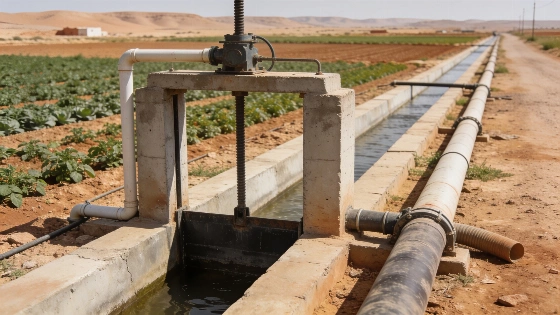
A MAD 395.22 million canal upgrade near Kasba Tadla aims to cut water losses and secure irrigation supplies for farms. The project forms part of Morocco's preparations for the 2026-2027 agricultural season.
At Beni Moussa West, Agriculture, Fisheries and Food Sovereignty Minister Khalid Hatimi inspected a filtration station built under the REDI irrigation project. It serves about 3,243 hectares and 900 farmers, supporting a shift to localized irrigation and upgrades to water distribution networks.
Irrigation investments in the Tadla plain
The Zaidania Canal modernization project near Kasba Tadla has a budget of MAD 395.22 million. Its stated aims are to improve hydraulic performance and reduce water losses, helping secure supplies for agricultural holdings in a region reliant on irrigation.
Water infrastructure is central to maintaining production in the Tadla agricultural perimeter. The filtration station Hatimi inspected cost MAD 15 million.
Seeds and preparations for the season
Morocco officially launched the season on Saturday, November 7, 2026, in Sidi Hammadi, Fquih Ben Salah Province, in the Béni Mellal-Khénifra region. The launch followed the 2025-2026 campaign, when improved rainfall was associated with an estimated cereal harvest of about 90 million quintals. Before sowing operations formally began, Hatimi visited agricultural projects in Béni Mellal and Fquih Ben Salah.
The ministry's campaign targets more than 4.9 million hectares of cereals, legumes and forage crops. It plans to mobilize about 1.3 million quintals of certified autumn-cereal seed, with a 50% subsidy, and 500,000 tonnes of phosphate fertilizer. The program also sets a direct-seeding target of 540,000 hectares and includes measures to support cattle-herd rebuilding, as Le Matin reported. These are campaign targets and planned allocations.
"From the heart of the Tadla plain, we are launching the new agricultural season," Hatimi told Hespress. He hoped to raise productivity and agricultural value while creating sustainable employment that benefits farmers and consumers.
The ministry's preparations include securing agricultural inputs, expanding agricultural insurance and modernizing irrigation, with particular attention to access to certified seeds. In Sidi Hammadi, Hatimi inspected a National Seed Marketing Company distribution center. SONACOS supplies farmers with certified seeds at subsidized prices. The broader package, as Lakome2 reported, pairs seed support with fertilizer availability and direct-seeding targets under the government's agricultural program.
Representatives of agricultural research institutions and advisory services reviewed arrangements with Cosumar. Agricultural insurers and Crédit Agricole du Maroc also took part. The agricultural programme is separate from Morocco's energy agenda, covered in a report on green hydrogen.
The new season follows several years of drought that affected agricultural production and farmers' financial capacity. Improved rainfall helped drive the previous campaign's cereal recovery, while attention remains on irrigation and input costs amid climate risks. Hatimi said climate change and geopolitical disruptions require new approaches. He also cited higher input prices: "We cannot continue with the same approach." He called for modernized production methods and greater investment under Morocco's Green Generation strategy.







