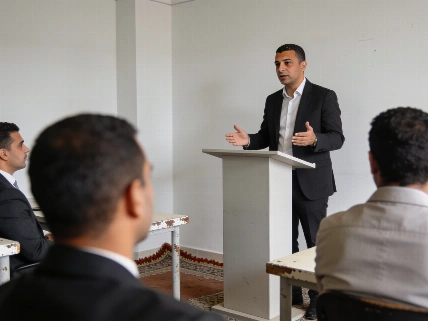
Morocco CyberSecurity Week opened in Rabat on October 12. Its three-day programme ties cyber resilience to national development priorities and cooperation across Africa.
Abdeltif Loudyi warned that artificial intelligence is accelerating the impact of cyberattacks as Morocco opened its cybersecurity forum in Rabat on October 12. The minister said protecting national information systems has become a necessity.
Government officials are attending, with African ministers among them. Cybersecurity figures from Morocco and abroad have also joined. The General Directorate of Information Systems Security, DGSSI, is hosting the event under the National Defense Administration. Morocco CyberSecurity Week runs through October 14.
The forum's theme, "Cybersecurity at the service of the digital transition and development," puts security alongside the expansion of digital services. Sessions cover critical infrastructure and national strategies. The programme also addresses cybercrime. Cloud services get their own focus, while skills development is on the agenda. Participants will examine how AI can strengthen cyberspace security and resilience.
Digital transition depends on systems that can withstand attack. Loudyi outlined a national approach built around strategy and regulation. It also calls for workforce development and public awareness. The plan includes stronger detection and response, alongside cooperation with Arab partners. Morocco also plans to work with African and international partners. For regional economies that rely increasingly on digital public services and connected infrastructure, coordination and compatible response practices can limit disruption across borders.
Workshops and training sessions are scheduled for specialists from Morocco and other Arab and African countries. UNIDIR, the United Nations Institute for Disarmament Research, will lead one workshop. Another part of the programme is a cybersecurity exercise planned with the International Telecommunication Union, ITU. Representatives from around thirty countries are expected to take part.
A dedicated day will focus on cybersecurity challenges across Africa. Smart Africa and the Moroccan Agency for International Cooperation, AMCI, are planning a cyberdiplomacy workshop for African embassies accredited to Morocco. Meetings of the African Network of Cybersecurity Authorities, ANCA, are also scheduled alongside the event. Regional coverage has described a Cyber Academy programme for African leaders in Rabat on October 7-8. DGSSI organized it with the World Bank. Smart Africa Digital Academy also took part. Its interactive training and cyber-crisis simulations were designed to help participants practise strategic decision-making, extending cooperation beyond technical training, as Voice of Nigeria reported. Morocco's infrastructure analysis raises a related issue: whether national systems can support development priorities.
DGSSI identified four near-term priorities. They include developing talent and supporting companies in Morocco's cybersecurity ecosystem. Protecting critical infrastructure is another priority, as is addressing AI-related challenges. The agency also outlined plans to expand security operations centres, or SOCs. It plans to strengthen oversight and auditing, and train information-security managers, as reported by Medi1News. An exhibition gives national and international companies space to present security services and solutions. It offers local firms a platform to build expertise and compete for work in a growing strategic sector.
Cloud governance carries economic and regulatory weight. Moroccan telecom operators have stressed the need to retain control over data and clearly assign responsibilities between cloud infrastructure providers and their customers. For governments and businesses adopting cloud services, those questions shape security and operational accountability, as well as confidence in digital investment.