

The prison administration has selected 22 hectares of state-owned land in Mediouna for five facilities estimated to cost MAD 1.5 billion. The plans leave the future of Casablanca's Oukacha site unresolved.
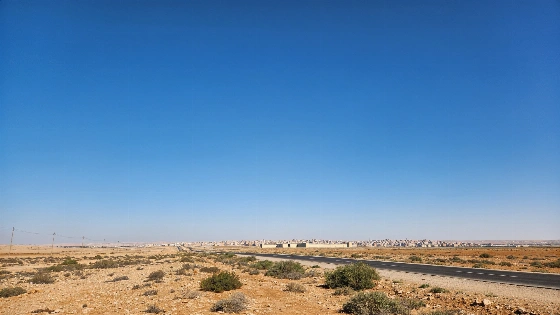
The selected site is a 22-hectare parcel of state-owned land along the El Gara road in Sidi Hajjaj Oued Hassar commune. It is intended to host a prison complex replacing Oukacha, in Casablanca's Ain Sebaa district, with five separate facilities planned in Mediouna Province.
Morocco's General Delegation for Prison Administration and Reintegration (DGAPR) is preparing the project, estimated to cost about MAD 1.5 billion. The plan was discussed during parliamentary consideration of the DGAPR's 2027 sectoral budget. Mohamed Salah Tamek, the delegation's general delegate, presented prison-capacity figures to the House of Representatives' justice, legislation and human rights committee and cautioned that building new facilities alone would not resolve overcrowding.
The pressure is particularly acute at Oukacha. The prison has an official capacity of 4,500 but holds nearly 12,000 inmates-about 267% of capacity, or approximately 7,500 above its intended limit. Le360 reported that Morocco's prisons were operating nationally at 158% of official capacity. Separate reporting put the national inmate population above 102,000 as of October.
Five separate facilities planned
Meetings involving Mediouna provincial officials, the prison administration's infrastructure department and other authorities examined the proposal and assessed the site. Tamek had told Parliament during Finance Bill discussions that technical studies were being prepared for five separate facilities to replace Oukacha.
The planned covered areas are 42,000 square metres for the first facility, 54,000 for the second and 34,000 for the third. The fourth and fifth are each planned to cover 42,000 square metres.
Design work and construction monitoring
Plans include perimeter walls and security towers, alongside administrative and service space. Each prison is specified to have an external wall 1,000 metres long and seven metres high, with five surveillance towers.
Consulting contracts cover architectural designs and engineering calculations for structures and foundations. The work also includes studies for electricity, water and sanitation networks, along with fire protection, air conditioning, video surveillance and information technology. Consultants are to monitor construction, check compliance with technical specifications and oversee provisional and final handovers.
The tender documents set 810 days for services under each contract lot: 60 days for technical studies and 730 days for construction monitoring, followed by the stages related to handover. Morocco's separate rail investment programme has also moved into construction and train orders.







