Morocco's armed forces have deployed Lyntris's Garda Cyber Suite across 65 sensor sites and six ships. The company has not disclosed the cost or which infrastructure the system protects.
The system is designed to keep military networks running when communications falter.
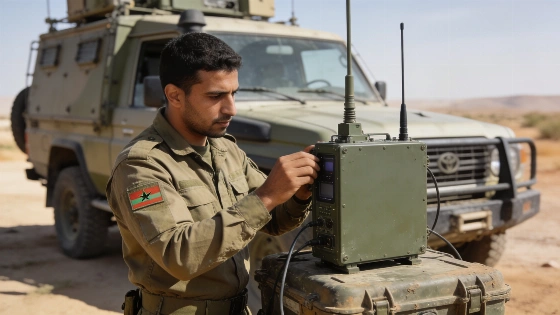
Morocco's Royal Armed Forces have deployed a cyber defense system built to detect network threats and support incident response. It adds digital monitoring to a military architecture that links sensors with command systems.
The reported installation includes 65 sensor sites. It also has three regional operations centers, three mobile command-and-control platforms and a main command center. Lyntris says between 150 and 200 operators and users work with the system.
U.S. technology company Lyntris developed the Garda Cyber Command Suite. Its artificial intelligence assesses threats to network infrastructure and identifies likely attack patterns. The system is designed to keep networks functioning when communications are degraded or interrupted, a capability intended for distributed military installations and remote locations.
Lyntris says Garda combines data from sensors and radar to build a unified operational picture. It also draws on electro-optical equipment. The company has reported deployments of Garda and its related Quasar platform across more than 100 monitored sites in Morocco and Armenia. Taiwan is also among the reported locations. Lyntris says operators carried out defensive cyber missions within days of deployment, and that the system is used aboard six ships as well as at fixed sites.
The deployment comes amid a wider national cybersecurity initiative. Morocco CyberSecurity Week took place in Rabat from October 12 to 14, 2026, under the auspices of the General Directorate for Information Systems Security, or DGSSI, which is part of the National Defense Administration. Organizers said the event was intended to strengthen the national cybersecurity system and was held in implementation of royal instructions.
Moroccan officials have linked cybersecurity policy to digitalization. They have also identified protecting critical infrastructure and keeping public networks resilient as priorities.
At the opening of the week, Minister Delegate to the Head of Government in charge of National Defense Abdellatif Loudiyi said the national strategy should prioritize prevention and early detection. He also called for rapid response and recovery from attacks. His stated priorities included legal and regulatory measures, along with investment in human resources. He called for technical resources and funding as well.
Loudiyi also cited public awareness and stronger detection and response. He highlighted specialist training and support for Moroccan cybersecurity companies. Critical infrastructure protection and the intersection of artificial intelligence with cybersecurity were also on his list, as reported by Morocco World News.
DGSSI Director General Maj. Gen. Abdellah Boutrig has described cybersecurity as part of digital sovereignty and a foundation for trust in digital development. He said the directorate is updating the legal and regulatory framework to account for new threats and technologies. It is also assessing sectoral maturity and risk, while strengthening detection and oversight through audits of public bodies and vital infrastructure. DGSSI assists with incident response, including cases involving simultaneous demands across multiple fronts, according to Le Reporter.
Hichem Moatadhid, a strategic and security researcher, told The Arab Weekly that Morocco is investing in technology transfer and training personnel to operate and maintain advanced systems. He identified military AI and drones as priorities, alongside battlefield communications and cyber defense.
Moatadhid said intrusions into military networks can disrupt communications. Manipulated sensor data can also shape military decisions. He described cyber vulnerabilities as a potential threat before physical confrontation begins.
The cyber deployment sits within broader defense cooperation between Rabat and Washington. Other reported military procurement includes Morocco's F-16 modernization programme. Lyntris said Moroccan personnel completed two weeks of training on its Garda C2 platform in San Diego in April. The platform combines data from different sensors to help commanders monitor developments on the ground in real time.
Morocco and U.S. Africa Command have agreed to establish the Africa Multidomain Training and Experimentation Center in Morocco. The planned center in Tan-Tan is scheduled to open by 2030. It is intended to include a multidomain training area and a drone academy, with an innovation and experimentation center also planned.
The memorandum of understanding was signed at AFRICOM headquarters on July 13. The planned training area is to cover weapons systems and defensive systems. It will also cover communications platforms. The drone academy is intended to train operators and instructors from Morocco and other African countries. Planners are also to receive training.
A first live-fire demonstration involving Moroccan and U.S. forces took place from August 3 to August 7. Moroccan Col. Zouhair El Hamdani, the FAR officer coordinating the project, called it a milestone for the center's vision of regional cooperation and technology development.