
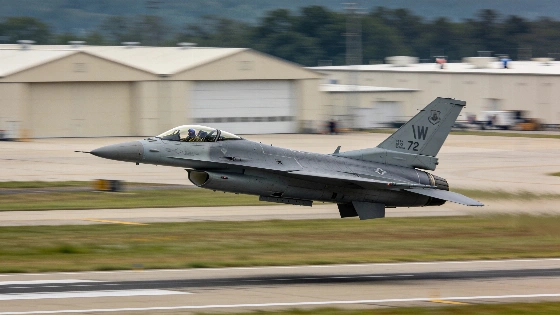
Morocco's first F-16D Block 72 flew at Lockheed Martin's Greenville facility on October 6, 2026. Testing is under way, but the delivery date and final programme cost have not been announced.
The two-seat F-16D flew from Greenville, South Carolina, on October 6, 2026. It was the first Block 72 built and the first jet from Morocco's new batch to begin flight testing.
Morocco is the launch customer for the Block 72 configuration. Mike Shoemaker, Lockheed Martin's vice president and general manager of its Integrated Fighter Group, called the flight a significant programme milestone. The Royal Moroccan Air Force has not received the aircraft. More testing and delivery preparations lie ahead, and Lockheed Martin has not set a delivery date. Some industry reports have pointed to 2027, but the company has not confirmed that schedule.
A new fleet standard built around the F-16
In March 2019, the U.S. government notified Congress of a possible Foreign Military Sale covering 25 F-16C/D Block 72 aircraft and associated equipment. The estimated value was $3.787 billion. The proposed package included 29 Pratt & Whitney F100-PW-229 engines, including four spares, and 26 AN/APG-83 SABR AESA radars, including one spare. It also listed modernized mission computers, Link 16 systems, navigation equipment, helmet-mounted cueing systems, and air-to-air and air-to-ground weapons. That $3.787 billion figure was an estimate for a proposed sale, not a confirmed final contract value. Morocco has not disclosed the final aircraft quantity or cost.
The Block 72 shares major modernization features with the Block 70, but the two versions use different engines. Block 72 jets have Pratt & Whitney F100-PW-229 engines. Block 70 aircraft use General Electric F110-GE-129 engines. Morocco's existing F-16C/D Block 52+ aircraft also use F100 engines. The Royal Moroccan Air Force is upgrading 23 of those jets to the F-16V configuration.
Testing and sustainment remain ahead
The aircraft must finish flight testing before delivery. Separately, Morocco plans a maintenance, repair and overhaul centre at Benslimane. The facility is designed to cover more than 8,000 square metres. Its initial focus is heavy maintenance and modernisation of C-130 Hercules aircraft. Future F-16 support has been discussed as a possible expansion, not a confirmed role for the centre.
The fighter programme is separate from Morocco's civilian infrastructure spending. The country's planned rail expansion, covered in AfDB rail financing, is a different investment track. For wider Maghreb economic context, MAP reporting and the UNECA's regional analysis offer broader coverage. Neither changes the distinction between the U.S. sale estimate and Morocco's undisclosed final contract terms.
Morocco's purchase is part of a wider effort to modernize its F-16 fleet and move toward a more common aircraft standard. The first flight confirms that testing has begun, not that the aircraft is in operational service. Testing must be completed, and a delivery schedule still needs to be announced. The final programme cost and delivered fleet size remain publicly unconfirmed.