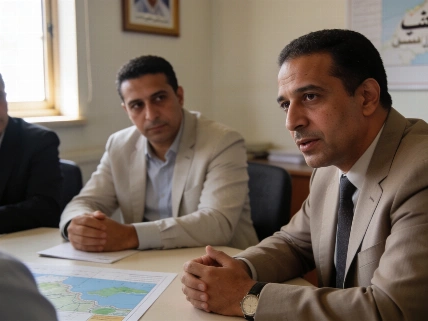
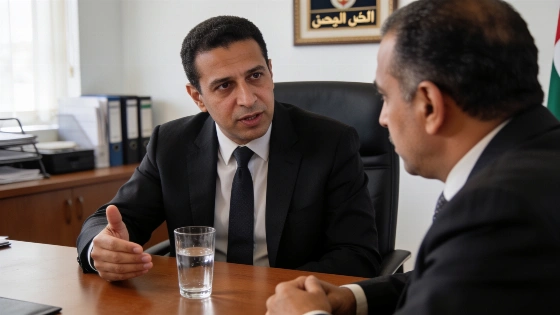
Water Resources Minister Husni Owaidan met German firm Nenner Hauser to discuss desalination and wastewater treatment. The talks are exploratory; visits to Italian facilities offer examples of wastewater reuse, but no contract or deployment by Nenner Hauser has been confirmed.
Nenner Hauser presented options for municipal and industrial wastewater treatment, seawater desalination and water-quality analysis during talks with Water Resources Minister Husni Owaidan. They also discussed whether the company's proposed solutions could fit Libya's water-sector needs.
No contract, delivery schedule or equipment deployment has been independently confirmed. Reports point to interest in water treatment and reuse, not a commercial agreement with Nenner Hauser.
Owaidan emphasized desalination and the reuse of treated wastewater as ways to strengthen water security. The meeting also covered whether the proposed technologies would suit Libya.
A separate European-supported initiative offers a practical comparison, but it is not evidence of a deal with the German company. Under the MUWALI project, representatives of 12 Libyan municipalities visited Italian water-treatment facilities to study wastewater management, treated-water reuse and integrated water-resource planning. The programme is coordinated by Italy's development cooperation agency AICS with Libyan and Italian partners. It also covers digital water data and non-conventional water sources.
During the visit, a treatment plant in Cremona was reported to treat around 10 million cubic metres of water a year. More than 3.1 million cubic metres of treated water are made available annually for potential agricultural use. Those figures describe one Italian facility; they are not a forecast or performance commitment for a Libyan project. University of Trento representative Gianni Andreottola said the project aims to show Libyan ministry and municipal specialists operating models they could adapt to local conditions.
Other work on Libya's water infrastructure is moving ahead through separate channels. The National Oil Corporation reported that technical and mechanical work, along with cleaning and disinfection of the gas supply system for the Zuwara desalination plant, had been completed. Gas supply from the Mellitah industrial complex had also begun as preparations for the plant's operation continued. This does not indicate cooperation with Nenner Hauser.
For regional comparisons, APS in Algeria, TAP in Tunisia and Morocco's MAP news agency provide official national reporting channels. Reports of meetings or policy priorities should not be treated as confirmed procurement. The UN Economic Commission for Africa provides a broader regional development perspective, but the project details available here do not establish a cross-border agreement or investment volume.
The next question is whether any assessment leads to choices that fit Libya's infrastructure and operating requirements. For now, desalination and treated-wastewater reuse are identified priorities, while Nenner Hauser's proposed technologies remain under evaluation. Libya has also explored foreign technology in other areas, including border-screening cooperation talks; that earlier discussion also did not confirm a purchase or deployment.