More than 27 US college and university representatives reportedly met Moroccan academics in Casablanca during an EducationUSA Morocco programme. They discussed research, mobility and cost-sharing, but the meetings were exploratory; no new agreements or funding commitments were independently confirmed.
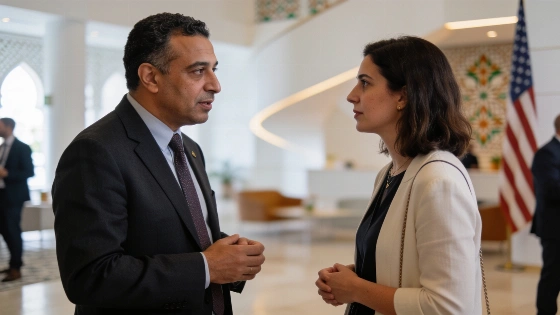
At a reception at Dar America on October 5, more than 27 US college and university representatives reportedly met Moroccan academics and education professionals. The gathering was part of a three-day EducationUSA Morocco programme focused on research cooperation and student mobility, according to the event account. The attendance figure and participant list could not be checked against official primary-source records.
The reception reportedly drew university representatives, diplomats, international school representatives, Fulbright alumni and American Fulbright grantees working in Morocco. Participants discussed possible cooperation, including hosting Moroccan Fulbright grantees and sharing programme costs. These were discussion points, not completed agreements or confirmed financial commitments. These were still talks.
New York University, Fordham, Temple, George Mason, Kent State, the University of North Texas, Rowan and Minnesota State were named among the US institutions represented. Moroccan alumni were reported to have come from Hassan II, Ibn Tofail, Moulay Ismaïl, Ibn Zohr and Hassan I universities, Al Akhawayn, the International University of Rabat, the Hassan II Institute of Agronomy and Veterinary Medicine, and Mohammed VI Polytechnic University. The institutional roster has not been independently verified.
The alumni network could provide a starting point for future exchanges. Participants may be able to draw on people with direct experience at some of the visiting institutions. Whether these contacts lead to lasting research ties or student and faculty mobility will depend on follow-up by the institutions.
MACECE executive director Rebecca Geffner reportedly named joint research, faculty and student mobility, and shared investment in talent as priorities. US Consul General Christopher Deutsch reportedly pointed to the longstanding educational connections supported by MACECE and the Fulbright Program. Available official records did not confirm these remarks. That remains unconfirmed. MACECE administers Fulbright in Morocco, while EducationUSA connects US institutions with Moroccan students, schools and universities, according to the event account.
The programme reportedly ran in Casablanca and Rabat from October 4 to 6. Organizers linked the meetings to Freedom 250, marking the 250th anniversary of US independence, and to Morocco's recognition of US independence in 1777. The programme also referenced Fulbright's 80th anniversary and more than four decades of the programme in Morocco. A search found no official follow-up announcement from MACECE, the US Department of State, the US Embassy in Morocco or Moroccan education authorities confirming new programmes, agreements or funding. No follow-up was confirmed.
The discussions raise a wider question for the Maghreb: how can universities turn international ties into lasting research capacity and opportunities for students and faculty? For regional comparison, readers can follow reporting from Morocco's MAP news agency and development analysis from the UN Economic Commission for Africa. Neither is cited here as confirmation of the Casablanca event. No regional trade or energy figures are added without verified supporting data.
Readers tracking student mobility can also read earlier coverage of Moroccan students. The meetings' significance will depend on whether institutions turn proposed cooperation into lasting exchanges and research partnerships. For now, the available information describes discussions, not completed outcomes.