
Two limited family clusters of diphtheria were reported in Morocco's Souss-Massa region. As of September 28, 2026, one case was confirmed and eight others remained under investigation; two people in that group had died. The figures point to the need for catch-up vaccination and health services families can reach.
On September 28, 2026, Morocco's Ministry of Health reported two limited family clusters in the Souss-Massa region. One was in Agadir-Ida-Ou-Tanane prefecture and the other in Chtouka-Ait Baha province. Diphtheria had been declared eliminated in Morocco in 1991. The update recorded one laboratory-confirmed case and eight cases under epidemiological and laboratory investigation. Two people among those under investigation had died, according to SNRT News reporting.
The distinction matters. The eight cases under investigation were not eight additional confirmed infections. Physician Tayeb Hamdi stressed that the count was one confirmed case and eight under investigation, not nine confirmed cases. Nor should the two deaths be described as confirmed diphtheria deaths before investigators establish their cause.
Dr Tayeb Hamdi, a physician and researcher in health policies and systems, links the resurgence to people who were never vaccinated or did not complete their doses and boosters. The immediate task is to stop transmission and reach families whose protection is incomplete or has lapsed.
National estimates cited in coverage of the outbreak put Morocco's diphtheria vaccination coverage at about 96%. Specialists warn that a national average can hide much lower coverage in particular communities. Separately, Najat Anwar, president of the association "Matkich Weldi", estimates that overall national vaccination coverage has fallen by approximately 4% since the COVID-19 pandemic. These figures measure different things and should not be compared directly.
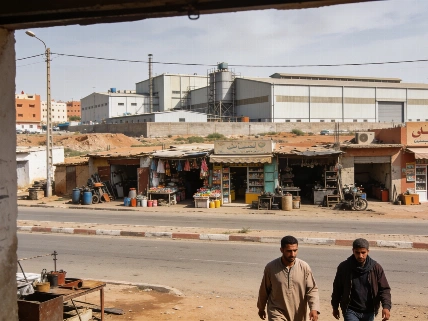
For families in remote and mountainous areas, getting a scheduled dose can mean finding transport, paying for the trip and losing time. Anwar points to poverty and difficulty reaching health centres as obstacles. Hamdi says mobile medical units help, but bad weather and the distance between settlements can still delay vaccinations. Distance has a cost.
Some barriers are less visible. Anwar says parents may lose a child's vaccination record and feel hesitant about telling health workers. Replacing the record is straightforward.
False claims on social media have added to confusion about vaccines, Anwar says. She also argues that specialists have not done enough to counter misleading information. Hamdi points to another problem: when a disease disappears from daily life, some parents may assume the threat has gone with it.
That assumption is risky. Hamdi says people need to complete the schedule and get boosters at school age and beyond to maintain immunity. He puts the coverage needed to contain transmission at above 85-90%. When coverage falls, more people remain unvaccinated or lose immunity over time.
Morocco's experience is part of a wider regional focus on immunisation. A separate example is Algeria's HPV plan. It concerns a different disease and vaccination programme, not diphtheria.
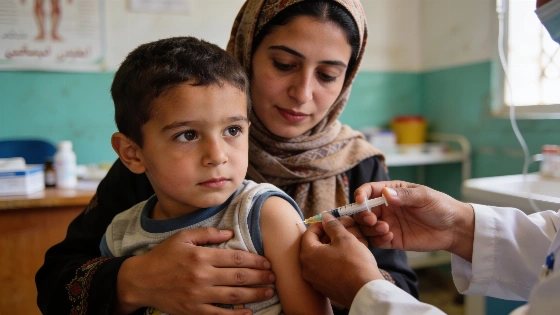
The Moroccan Ministry of Health's response plan provides for targeted or mass vaccination campaigns in affected areas and neighbouring zones at risk. It prioritises children under five, schoolchildren, older people and healthcare workers. The plan uses diphtheria-tetanus-pertussis vaccine for children aged one to seven and diphtheria-tetanus vaccine for people over seven, according to Le360's account of the plan.
The national protocol also calls for catch-up vaccination. Unvaccinated contacts are assigned a full course. Partially vaccinated people receive missing doses. During an outbreak, a booster is generally recommended if the last dose was given more than five years earlier. For people starting the primary series, the protocol specifies three doses. The second must come no sooner than four weeks after the first, and the third at least six months after the second. Two booster doses follow, at intervals of at least a year.
Hamdi calls for isolating infected people, prompt antitoxin and antibiotic treatment, contact tracing, vaccination and close medical monitoring. He also urges catch-up campaigns in areas with low coverage, especially for children who missed routine doses or school-age boosters. Laboratories and healthcare workers need to identify suspected cases quickly. Because diphtheria is rare, clinicians may first consider more familiar respiratory illnesses.
Anwar says health workers, educators, local associations and media all have a role in giving families clear information and checking vaccination records. Parent association meetings and local groups can also help families navigate early childhood vaccination.
The lesson is practical. A vaccine schedule works only when families can reach services, keep track of doses and trust the information they receive. Morocco's response must pair rapid case control with reliable catch-up vaccination and local outreach. Otherwise, the gaps that allowed diphtheria to return will remain open.