
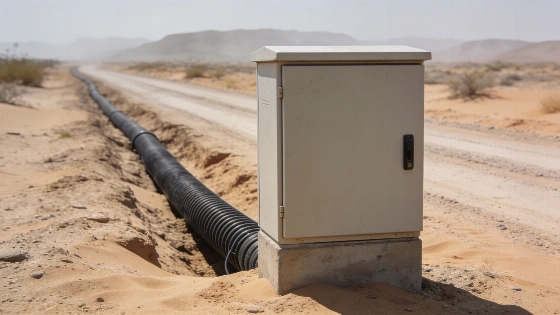
Officials launched the Algeria-Niger fiber connection in Assamaka on October 6, 2026. It links In Guezzam with the route toward Arlit and Agadez, with an initial capacity of 100 Gbps and room to expand.
Officials brought the new fiber segment into service at a ceremony in Assamaka, Niger, on October 6, 2026. It links In Guezzam in Algeria with the route toward Arlit and Agadez. Algeria's official news agency, APS, reported the launch. The line has an initial capacity of 100 gigabits per second.
Radio Algeria reported that the network can be expanded in stages as data volumes and digital demand grow. The 100 Gbps figure describes its initial technical capacity, not the amount of traffic it currently carries. Traffic data remain unavailable. Public reporting has not established the project's cost, the segment's length or an expansion timetable.
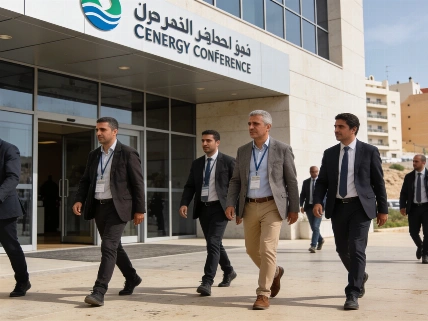
Algeria's Minister of Post and Telecommunications, Sid-Ali Zerrouki, attended the ceremony with Niger's Minister of Communication and New Information Technologies, Hamani Kargné. Technical teams from Algérie Télécom and Niger Télécom completed the segment, according to El Khabar. Zerrouki said the choice of Assamaka reflected the corridor's cross-border character.
The project is being developed through the Trans-Saharan Backbone Connectivity Committee and is associated with the New Partnership for Africa's Development (NEPAD). Six countries are taking part: Algeria, Mali, Niger, Mauritania, Nigeria and Chad. The APS announcement describes the Algeria-Niger link as an operational segment of the wider regional project. The full backbone is not complete.
Cross-border links can support services that rely on data connections and help connect regional networks. Their economic impact will depend on how the new line connects to national systems and how operators use it. Businesses and public services will also need access. The launch confirms an infrastructure step, but reported figures do not yet show changes in access, costs or commercial traffic.
Algeria has also stated an ambition to strengthen African digital sovereignty. Morocco's AI strategy points to a related regional focus on digital development. It concerns a different technology and is not part of the Trans-Saharan fiber project. For now, the confirmed result is an operational Algeria-Niger segment with an initial capacity of 100 Gbps. Benefits from the wider corridor will depend on further connections and use.