
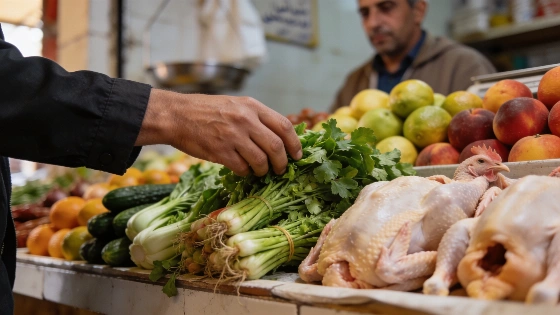
Tunisia's annual inflation rate reached 5.6% in September, while food prices rose 8.4% year on year. Food's large share of household spending helps explain where the pressure is landing.
The National Institute of Statistics (INS) published Tunisia's September figures on October 5. Its September price index puts annual inflation at 5.6%, up from 5.2% in August. Food and beverage prices rose 8.4% year on year. Consumer prices increased 0.8% from August.
Core inflation, which excludes food and energy, stayed at 4.9%. The increase was concentrated in goods households buy regularly, rather than in a similar rise across the underlying measure. Food inflation accelerated from 7.5% in August. The INS measure of core inflation did not change.
September marked the second straight month of rising annual inflation. Trading Economics reported that the 5.6% rate was the highest since April 2025. That puts the latest reading in a broader upward movement, not a one-month anomaly.
Food takes up a large share of household budgets. Tunisian economist Moez Sassi said it accounts for 26.2% of the consumer basket, and about 80% of food products are sold at freely set prices. Sassi has argued that price controls alone cannot contain inflation. He says reforms to production systems and support for agriculture are also needed.
Poultry prices rose 16.5% over the year. Fresh fruit climbed 16.3%, and sheep meat rose 14.6%. Beef prices increased 13%, fresh vegetables 12.9% and fresh fish 10.4%. Food oils moved the other way, falling 4.1%.
The sharpest food-price pressure was in goods sold at freely set prices. Those items rose 9.4%, compared with 0.2% for regulated food. The divide also appears across all products: freely priced items climbed 6.8%, while regulated products rose 1.2%. The INS figures show the gap. They do not, by themselves, establish that price regulation caused it.
Clothing and footwear prices rose 9.2%, up from 9% in August. Education costs increased 5.5%, compared with 5.4%, as the new school year began. Manufactured goods rose 4.8%. Household cleaning and maintenance products were up 5.1%.
Services prices advanced 4.2%, while accommodation tariffs rose 14.7%. For more context on Tunisia's wider economic pressures, investment constraints offer a related angle. The figures in this article measure consumer prices.
The gap is clear. Regulated goods saw much smaller increases than freely priced items, and freely priced food faced the sharpest pressure. With core inflation unchanged, the immediate squeeze is concentrated in essentials. Sassi's assessment points to the limits of relying on price controls alone. Production capacity and agricultural supply also matter to the longer-term response. Food prices remain a key measure for households and policymakers to watch.