
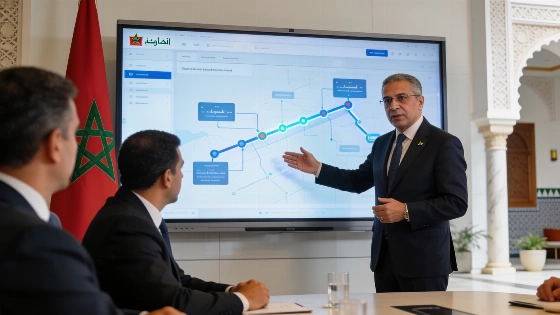
Morocco has moved from planning to implementation on its national AI strategy, targeting 100 billion dirhams in GDP value and 50,000 jobs by 2030, with a focus on digital sovereignty and homegrown innovation.
Morocco is no longer content to watch the global AI race from the sidelines. This week in Rabat, the Ministry of Digital Transition and Administration Reform unveiled the operational phase of its "Morocco AI 2030" roadmap, setting out to generate 100 billion dirhams in GDP value and create 50,000 jobs by the end of the decade. The government is betting that AI is not just a technological trend but a lever for national economic transformation.
At the heart of the plan is a clear ambition: Morocco wants to move from being a consumer of imported digital solutions to a producer and exporter of trusted, sovereign AI technologies. The roadmap, branded as "AI Made in Morocco," is built on three pillars-sovereignty and trust, innovation and competitiveness, and impact, adoption and outreach. The government's message is blunt: digital sovereignty is now a matter of national strategy, not just technical preference.
Concrete initiatives and institutional muscle
To turn vision into reality, the Ministry is deploying a network of JAZARI Institutes, which will serve as the operational backbone for AI research, education, and industrial application. These include JAZARI ROOT, JAZARI Smart City, JAZARI EduTech, and JAZARI Industrie X.0. The plan is to train and certify 200,000 AI specialists, starting from early education, and to embed AI skills across the workforce.
Morocco is also rolling out a sovereign AI marketplace, designed to ensure that public and private sector actors can access secure, locally controlled AI solutions. The first flagship product, Idarati AI, is an agentic assistant built to guide citizens through administrative procedures-an early signal that the government intends to use AI to streamline public services and reduce bureaucratic friction.
Economic stakes and the path to digital sovereignty
The numbers are ambitious: 100 billion dirhams in added GDP value, 50,000 jobs, and a new generation of AI talent. But the government is not just chasing growth for its own sake. The "Pink Book"-"Towards Digital Sovereignty - 70 Years Later, 1956-2026"-frames the strategy as a historic pivot from dependence on foreign technology to national control over digital assets and infrastructure. The roadmap's focus on secure data handling and infrastructure control is a direct response to the vulnerabilities exposed by global digital interdependence.
Proof-of-concept projects, such as a national meta-application and e-wallet, are already in the pipeline, aiming to further integrate public services and simplify citizen-state interactions. The government's approach is unapologetically top-down, aligning with the High Royal Guidelines of HM King Mohammed VI, which position AI, new technologies, and renewables as the backbone of Morocco's future economic model.
Winners, losers, and the real test ahead
For Moroccan businesses, the strategy promises new opportunities-provided they can adapt to the pace of technological change and leverage the emerging AI ecosystem. For the public sector, the pressure is on to deliver tangible improvements in service delivery and administrative efficiency. The real losers will be those who underestimate the scale of the shift or cling to legacy systems and imported solutions.
Morocco's AI push is a calculated gamble on national capacity and digital independence. The government has set the bar high, but the real test will be whether these initiatives move beyond announcements and pilot projects to deliver measurable economic and social outcomes. If Morocco can turn its AI ambitions into operational reality, it will not only reshape its own digital landscape but set a precedent for the wider Maghreb. Anything less risks relegating the country to the status of a digital client state-precisely the fate this strategy is designed to avoid.