
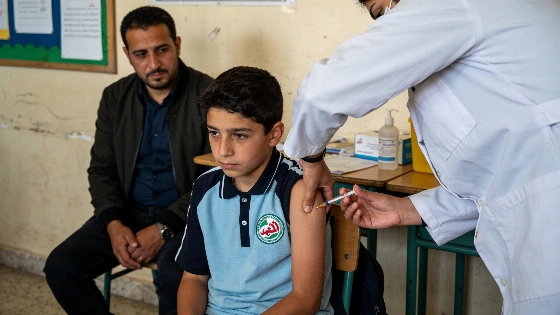
Algeria plans to offer school-based HPV vaccination to girls and boys aged 11-13 from the 2026-2027 school year. The expansion builds on a free program for girls aged 11-12 that began in 2023 and forms part of the country's cancer-prevention strategy.
A free, school-based HPV vaccination program for girls aged 11-12 began in Algeria in April 2023, according to a study in the International Journal of Cancer. From the 2026-2027 school year, the country plans to offer routine vaccination to girls and boys aged 11-13. This would expand an existing program, not introduce HPV vaccination for the first time.
The expansion is part of Algeria's wider effort to prevent cancer and improve access to care. The practical test is whether schools can deliver the vaccine consistently and families get clear, reliable information about its benefits and safety. Public announcements cited here do not specify the full budget or procurement arrangements for the expanded program. Delivery is the test.
Persistent infection with high-risk HPV types is the primary cause of nearly all cervical cancer cases. HPV is also linked to cancers of the anus, vulva, vagina, penis and oropharynx, as well as genital warts. Vaccination before exposure to the virus can prevent infections that may lead to these diseases.
Vaccinating both girls and boys offers direct protection and may also reduce transmission in the wider community. International evidence links established vaccination programs with fewer HPV infections, precancerous cervical lesions and genital warts. Studies have also reported declines in invasive cervical cancer among vaccinated populations. Vaccination complements cervical screening. It does not replace it.
Algeria's National Cancer Control Strategy for 2025-2035 gives greater weight to prevention, early diagnosis and screening alongside treatment. On 23 September 2026, Radio Algérie reported that implementation and monitoring had entered a new phase. A working group attached to the Prime Minister will track the strategy. Authorities have also stressed the need to harmonize treatment protocols across the country.
The wider oncology system will affect how the strategy is delivered. In its report on the national plan, Radio Algérie cited 15 cancer-treatment centres, 24 radiotherapy centres and 61 linear accelerators. It also reported 52 innovative treatments in the national therapeutic arsenal. These figures describe capacity across cancer care. They do not show how evenly services are distributed or how quickly patients can access them. Capacity is not access.
Algeria's earlier HPV program gives the planned expansion a starting point. A study in the International Journal of Cancer identifies public education and advocacy, along with the shift from a two-dose to a one-dose schedule, as measures intended to support broader uptake. School delivery and free provision can reduce practical and financial barriers. Coverage will still depend on vaccine supply, implementation across regions and public confidence.
Parents, healthcare professionals, educators, community leaders and media outlets will shape public understanding. Communication should explain that HPV vaccination protects both sexes and works best before exposure to the virus. It should answer questions plainly and separate established evidence from claims that have not been substantiated. Clear answers matter.
Oncologists have a role beyond treatment. They can support evidence-based vaccination policies and public education. Prevention also depends on coordinated care, including the work discussed in Algerian oncology nursing, where nurses can help strengthen treatment safety and coordination.
Global figures show both progress and a remaining gap. A review summarizing WHO-linked data reported that 149 of 194 countries had included HPV vaccination in national schedules by 2025. Yet 55% of girls worldwide still lived in countries without such a program. WHO continues to promote vaccination to prevent cervical and other HPV-associated cancers. It has also noted that coverage remains below global targets. The gap remains.
From the planned 2026-2027 expansion onward, key measures will include uptake by age and sex, continuity of school delivery and, over time, changes in HPV infection and precancerous lesions. Radio Algérie reported that the strategy's monitoring framework could help track progress. Transparent coverage data will be needed to assess whether the program reaches students consistently across the country.
Expanding HPV vaccination would strengthen Algeria's shift toward cancer prevention as well as treatment. The policy direction is clear. Its benefits will depend on reliable delivery, sustained public engagement and continued cervical screening. Delivery will decide.