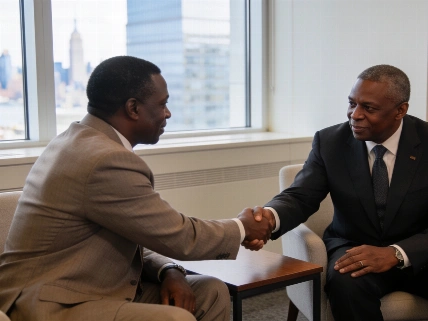
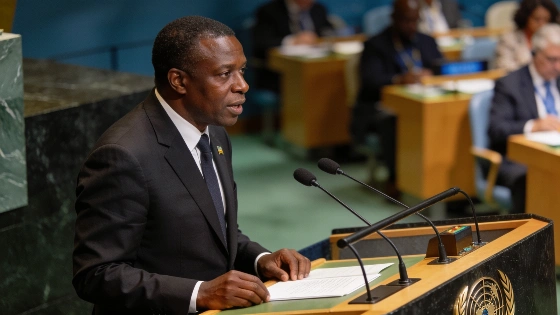
At the UN, Niger's prime minister praised Algeria and pointed to cooperation on energy, trade and infrastructure. The remarks came after reports of Algerian military support following an attempted mutiny in Niamey, while uncertainty over Niger's politics and security continues.
Ali Mahaman Lamine Zeine tied Algeria's support to investment in Niger's natural resources and help for its defence sector during the 81st UN General Assembly. He also named cooperation on energy, health, education, water resources and agriculture. It was a public signal.
Algerian public broadcaster Radio Algérie reported that Foreign Minister Ahmed Attaf and Niger's foreign minister, Bakary Yaou Sangaré, discussed ways to expand cooperation. Their agenda covered hydrocarbons, energy, trade, agriculture and infrastructure. The talks took place on the sidelines of the General Assembly.
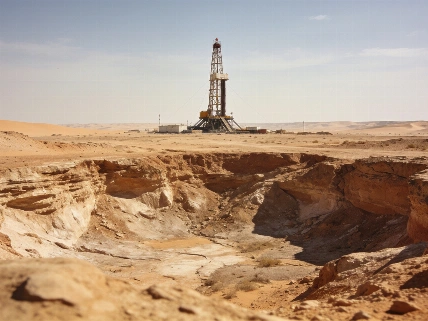
Radio Algérie also said Algeria was ready to keep helping Niger develop and monetise its natural resources. The information available gave no specific investment volumes or project financing commitments.
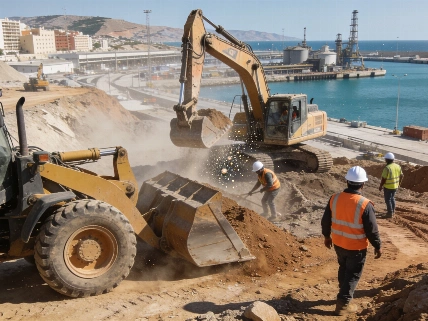
The agenda matters to landlocked Niger, which shares a border with Algeria. Closer work on energy, trade and infrastructure could support regional links and resource development. But the public statements do not confirm that any particular transport or energy project has been approved or funded.
Reports differ on the attempted mutiny. Regional coverage places it on Aug. 28 and 29, 2026, and says government forces kept control. Reported targets included Base 101 near Niamey's airport, the presidential area and the state broadcaster.
The government said it defeated the mutineers with help from Russian personnel based in Niger. The information available does not independently confirm that account. That distinction matters.
Regional reports said Algeria sent four Su-30MKA fighter jets, a refuelling aircraft and a transport plane to Niamey after the attempted mutiny. If accurate, the deployment would be a visible show of support beyond diplomacy. Its operational role has not been publicly confirmed, and accounts of Algeria's motives remain unverified.
Algeria condemned Abdourahamane Tiani's 2023 coup. Diplomatic and economic ties have since grown closer. Radio Algérie's account of the General Assembly meetings describes a wide agenda, not a single security deal.
Tiani's government has also faced scrutiny over its domestic political course. He took power after ousting elected president Mohamed Bazoum in 2023. Bazoum remains detained with his wife.
Human Rights Watch reported that the UN Working Group on Arbitrary Detention found their detention arbitrary in February 2025 and called for their immediate release. Niger's authorities reject that position and say the matter falls under national jurisdiction. Human Rights Watch also reported that Tiani signed a decree on Sept. 17, 2026, stripping five prominent exiled critics of their nationality.
At the UN, Niamey also aligned Niger with Mali and Burkina Faso, the other members of the Alliance of Sahel States. It presented the bloc's position as a matter of African independence. Coverage of Bamako's alignment has also tracked Mali's wider diplomatic stance.
Niger has set no timeline for a return to civilian rule. The strength of its external partnerships will remain tied to developments at home.
Algeria's growing engagement has coincided with concern in Algiers about the United Arab Emirates' expanding role in the Sahel and its support for Khalifa Haftar in eastern Libya. Haftar has been accused of backing rebel groups in northern Niger. The allegation, and any link to the attempted mutiny, remain unverified in the information available. Algeria severed diplomatic relations with the UAE on Sept. 10, 2026.
Other speakers at the 81st session addressed different global concerns. Sweden's Foreign Minister Maria Malmer Stenergard said women's economic empowerment is a matter of freedom. She spoke about her grandmother's experience in rural Sweden, condemned Russia's invasion of Ukraine and called for accountability for violations.
Chinese Vice President Han Zheng called for dialogue instead of military action. He backed a Gaza settlement in which Palestinians govern Palestine and supported a two-state solution. He also urged Washington to lift its blockade and sanctions on Cuba and called for more support for developing countries.
The regional message paired public diplomacy with reported security assistance. Zeine thanked Algeria at the UN, while Radio Algérie described a broader agenda covering defence, energy and development. Whether the relationship produces lasting projects will depend on financing, delivery and Niger's unsettled political transition.