
Algerian oncology nurses can spot treatment complications and help coordinate specialists. Nurse navigator roles remain a possible next step, not an established system-wide change, as the country expands cancer care.
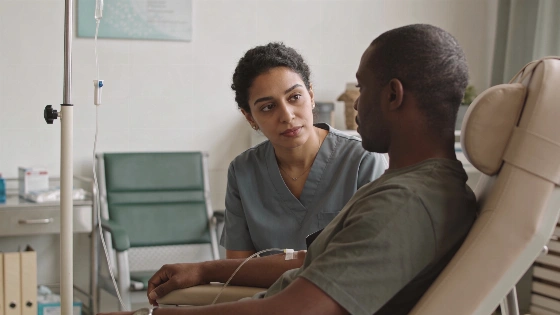
During cancer treatment, Algerian nurses check for clinical changes, flag complications and pass information between patients and care teams. They are often the professionals closest to patients as treatment unfolds.
Their work now reaches well beyond administering chemotherapy. Cancer care can involve systemic treatments, radiotherapy, surgery and other specialist interventions. Nurses help monitor patients, support safety and explain care. Algeria's health policy also puts more emphasis on continuity across prevention, diagnosis, treatment and social support.
At the 2nd International Congress on Patients with Cancer, held in Algeria on 22-23 September 2026, the Ministry of Health said it would keep mobilizing human and material resources to improve care. Radio Algérie reported that Algeria has 15 specialized cancer centres, 24 radiotherapy centres and 61 linear accelerators. The national therapeutic formulary also includes 52 innovative treatments. These figures describe treatment capacity. They do not show how evenly services or specialist staff are distributed.
The spending is substantial. El Watan reported that the health minister put public funding for cancer treatment at more than 73 billion Algerian dinars. The minister also stressed early diagnosis and continuity along the patient pathway. That makes coordination a practical concern alongside investment in facilities and therapies. The available figures do not say what share of funding goes to oncology nursing, according to El Watan's report.
The Algerian Federation of Associations of Patients with Cancer organized the congress with the Ministry of Health, under a patient-centred national approach. The ministry has named prevention, diagnosis and innovation as priorities, alongside support for patients and families. For nurses, that wider approach means helping patients understand care plans and navigate referrals, not just carrying out clinical procedures.
Nurses check patient identity, treatment protocols and doses. They also review relevant biological and clinical parameters. During and after treatment, they watch for adverse effects such as hypersensitivity reactions, extravasation and acute toxicities. This is clinical work.
Regular contact gives nurses a view of how patients are coping between specialist consultations. They can learn whether a patient is tolerating treatment, understands the plan or is facing difficulties along the care pathway. Those observations can inform the care team. They do not replace medical assessment or decision-making.
A patient may need oncology consultations, surgery, radiotherapy, imaging, laboratory tests, systemic treatment, psychological support or nutritional support. Nurses can pass on clinical information, arrange appointments and connect departments. They can also direct patients to the right professionals. When hand-offs fail, delays, repeated examinations and lost information become more likely.
The concern here is continuity and safety across cancer care. It differs from the import exposure discussed in an earlier market report on Algeria's prebiotic sugar sector.
Dedicated oncology nurse coordinators or nurse navigators could guide patients from diagnosis through treatment and follow-up. They could help coordinate appointments, connect care teams and explain treatment plans. Such roles may be useful at cancer centres that manage many patients or offer several treatment types. They are a possible development, not an established nationwide model.
Where local structures allow, nurses could also share their patient-level knowledge at multidisciplinary tumor boards. Their observations may cover treatment tolerance, health status, family or social difficulties, adherence and how well a patient understands the care plan. That can help specialists assess the patient more fully.
Algerian cancer services should treat oncology nursing as part of clinical decision-making and care coordination, not as a job limited to delivering medication. Nurse navigators remain a promising possibility. Safer, more coherent care also depends on making nurses' regular contact with patients part of multidisciplinary practice.