
Morocco has rolled out a new border plan with Mauritania, hoping to regain lost ground as Algeria deepens its partnership with Nouakchott and Rabat's old alliance with Senegal falters.
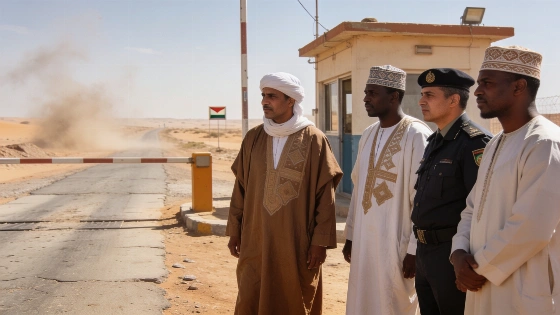
Morocco is moving fast to upgrade the Mauritanian border crossing near Western Sahara. The push comes as regional competition heats up. On September 21, 2026, in Rabat, Mauritania's Minister of Equipment and Transport, Ely Ould El Veirik, met with Morocco's Minister of Equipment and Water, Nizar Baraka. They signed a deal to rebuild and expand the Nouakchott-Nouadhibou road through the kilometer 55 checkpoint. The project will cover about 480 kilometers. It aims to connect the two countries' road networks and boost trade. The Mauritanian News Agency and both ministries confirmed the details.
Many see this move as Morocco's answer to Algeria's growing partnership with Mauritania. Algeria has been busy with its own 840-kilometer Tindouf-Zouerate corridor and a string of high-level meetings. In April 2026, Mauritania's Prime Minister Mokhtar Ould Djay visited Algiers for joint commission talks. In August, Algerian Foreign Minister Ahmed Attaf met his Mauritanian counterpart. These steps were reported by the Algerian Press Service and regional diplomats.
Morocco is feeling the pressure. Algeria is signing new deals across the Sahel, including with Niger, Chad, and Mali. Rabat's old route into West Africa is now at risk. Tensions with Senegal have made things worse. Morocco once counted on Senegal as a close ally, but that changed after claims that Rabat interfered in Senegal's politics. The fall of Macky Sall and the rise of Bassirou Diomaye Faye have left Morocco exposed. Rabat is accused of backing Faye against Ousmane Sonko. If Sonko, called the "Erdogan of Senegal," takes power, Morocco's gamble could backfire.
Algeria's push in Mauritania goes beyond roads and trade. Last week, State Minister and Dean of the Grand Mosque of Algiers, Sheikh Mohamed El-Mamoun El-Kacimi El-Hassani, visited Nouakchott for the 39th International Conference on the Prophet's Biography. He met with Mauritanian officials and scholars to talk about deeper scientific and religious ties. This adds a religious angle to Algeria's regional strategy. The Mauritanian Ministry of Equipment and Transport called the new Morocco-Mauritania road deal "strategic and fruitful cooperation." The ministry said the upgraded corridor should improve transport and economic links between Nouakchott and Nouadhibou, as reported by Asharq Al-Awsat and the Mauritanian News Agency.
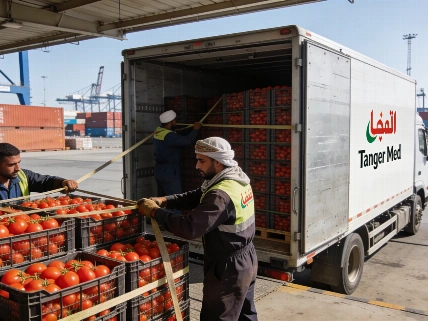
The project is more than just a road fix. It includes a joint project and consulting office in Mauritania to manage the work. Several regional outlets and the Mauritanian government's portal confirmed this. The Nouakchott-Nouadhibou corridor is seen by francophone and Arabophone media as a key route for trade across Africa. It is part of a bigger West African road network that is now crucial for commerce and logistics, according to the Mauritanian News Agency.
Morocco is now scrambling to show it still matters. The new border project is smaller than Algeria's Tindouf-Zouerate corridor, but Rabat wants to prove Mauritania is still in its sights. Regional analysts and the Moroccan state news agency MAP point out that Morocco's limited finances and struggles at home could hold the project back. Diplomatic observers also mention a "third party known for fomenting unrest in the region"-a hint at the United Arab Emirates. Algeria recently cut ties with Abu Dhabi after similar interference in Mali, Niger, Chad, and Burkina Faso.
The Guerguerat crossing, now set for an upgrade, was a flashpoint when the ceasefire with the Polisario Front broke down in November 2020. Morocco's new project is meant to counter Algeria's infrastructure push, but its real impact is unclear. The UN Economic Commission for Africa (UNECA) says the wider West African corridor is a strategic prize for both Rabat and Algiers as they compete for control over trans-Saharan trade and logistics.
Morocco's bid to regain influence through border works and political outreach to Mauritania is a risky bet with few resources. The regime's focus on projects at the edge may calm some at home for now, but Algeria's steady approach-covering security, economics, and religious ties-has put Rabat on the back foot. Unless Morocco can turn its plans into real influence, it could lose its last key route to West Africa, with lasting effects on its regional role.