
Turnout in Morocco's 2026 legislative elections dropped to just 38 percent. The numbers reveal a deepening divide between ordinary people and the political class as inflation and joblessness eat away at trust in the system.
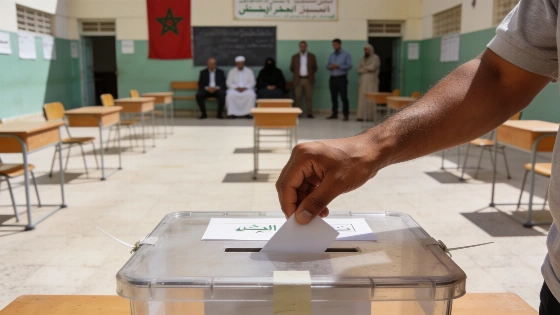
When only 38 percent of voters show up for a national election, the message is clear. Morocco's September 2026 legislative vote was less about competing ideas and more about public frustration. Politicians talked about civic duty on TV and radio. On the streets of Casablanca and Rabat, polling stations stayed quiet. There were no lines. The silence said more than any campaign slogan. The Ministry of Interior put turnout at 38.02%. That is the lowest in almost twenty years. In 2021, turnout reached 50.35%. The only lower figure was 36.8% in 2007, according to AFP and the national news agency MAP.
By midday, turnout was stuck at 11 percent. Official numbers showed just 4.23% had voted by 10:00 and 28.05% by 17:00. The pace barely picked up as the day went on. Voting ran from 08:00 to 19:00, but most people stayed away. The election filled 395 seats in the House of Representatives. About 15.8 million people were registered to vote. But Morocco has an estimated 27 million people of voting age. That gap shows how many are left out and how hard it is for the High Authority for Elections and the Ministry of the Interior to get more people involved, as reported by France 24.
Economic strain and political alienation
Morocco's main parties-the National Rally of Independents (RNI), Authenticity and Modernity Party (PAM), Istiqlal, and the Justice and Development Party (PJD)-all ran their usual campaigns. For many, these names now mean broken promises. The disconnect is sharpest among young people. They make up a big part of the population but do not see their needs-jobs, education, healthcare-reflected in policy. Slogans about youth empowerment have faded into the background. Economic hardship drowns them out. The Moroccan Press Agency (MAP) and the United Nations Economic Commission for Africa (UNECA) both point to youth unemployment staying above 30% in cities. This keeps frustration high and trust in politics low.
This feeling is not new. As reported earlier, youth-led groups have tried to turn anger into action. But the 2026 turnout shows the gap between talk and reality is only getting wider. The Authenticity and Modernity Party (PAM), which is close to the monarchy, took a provisional lead with 97 out of 395 seats, according to Al Jazeera and official statements. This keeps establishment-aligned blocs in control, even as most people stay home.
Abstention as political statement
Low turnout is not just apathy. In Morocco right now, staying home is a choice. It is a way for people to say the current political options do not meet their needs. Politicians focus on coalitions and seat numbers. But the real story is told by those who did not vote at all. Their absence is a direct sign that the system, in their eyes, has failed to deliver on basic economic and social needs. The Algerian Press Service (APS) and regional watchers have seen the same pattern across North Africa. Economic pressure and little political change have worn down trust in elections.
Unless Morocco's leaders face this trust gap and show they can make real changes, voting will stay low for many. The 2026 turnout is not just a number. It is a warning. If leaders keep ignoring abstention, they risk locking in a cycle of disengagement that will be much harder to fix than any single election loss. For more official data and updates, see the Moroccan Press Agency.