
Algeria's prebiotic sugar market is growing fast, but heavy import dependence leaves it exposed to global price swings and supply chain risks.
Algeria's market for prebiotic sugar complexes is growing at a pace few other food ingredient sectors can match. But the country depends almost entirely on imports, so every shakeup in global shipping or currency markets hits hard. Over 85% of finished ingredients come from Europe, China, and the Middle East. When shipping slows or foreign-exchange allocations stall, Algerian buyers face unpredictable costs and delays that can stretch for weeks. The International Monetary Fund (IMF) has flagged this as a major risk. In its 2026 Article IV consultation, the IMF ties Algeria's economic strategy to cutting imports and building up non-hydrocarbon exports. Import dependence, the IMF says, is still a core macroeconomic risk. The Algerian Press Service (APS) has also covered government moves to diversify supply and shore up food security, especially for sensitive goods like food ingredients and supplements.
Premium rhamnose-rich grades are carving out a clear spot in Algeria's supplement shelves. More shoppers and product makers now look for higher-purity complexes, not just standard prebiotic oligosaccharides, hoping for targeted gut-microbiome benefits. This isn't just about taste. It's pushing value growth even faster than volume. By 2035, premium products could add 5-10 percentage points of share in the category. The Ministry of Pharmaceutical Industry says formalizing the supplement sector is a top policy goal, and rules are slowly lining up with international standards.
Import dependence and supply chain risks
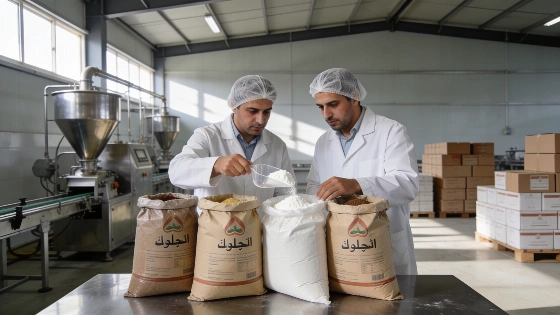
Algeria's own production of prebiotic sugar complexes is still small. Most activity is limited to blending and formulation in Algiers and Oran. There are no large-scale plants for fermenting or extracting rhamnose-rich oligosaccharides. Local suppliers have to import bulk ingredients, then repackage or make private-label products. This leaves the market wide open to global price swings, energy costs, and freight rates. Imported rhamnose-rich complexes usually land at USD 18 to 45 per kilogram, depending on purity, source, and extraction method. European plant-extracted grades fetch the highest prices.
After clearing customs, wholesale prices jump another 20-40% because of logistics and channel markups. Retail supplement prices climb even higher. Importers also face hurdles with currency allocation and licensing, which can delay purchases and push up costs. Tariffs range from 5-30% depending on how products are classified under HS 170290 or HS 294000. Trade deals with the European Union and some Arab countries can lower duties, but meeting rules-of-origin brings more paperwork. The Tunis Afrique Presse (TAP) has reported that similar regulatory and currency issues affect other Maghreb countries, raising costs and making supply less reliable across the region.
Macroeconomic context and foreign reserves
Algeria's exposure to outside shocks is made worse by its foreign currency reserve situation. The IMF expects reserves to drop from $51 billion in 2025 to $46.5 billion in 2026. This would make Algeria even more vulnerable to rising import costs and supply problems. In 2023, reserves covered 15.6 months of imports. This is a key number for understanding how changes in import prices or volumes can squeeze currency and limit trade policy options. The Ministry of Finance has stressed the need for careful reserve management, especially as the government pushes digital tax reforms and broader economic changes. More details are in the IMF country report.
Demand drivers and market segmentation
Human dietary supplements make up 40-50% of Algeria's demand for prebiotic sugar complexes. Functional food and drink fortification-mainly in dairy, juices, and cereals-accounts for another 20-30%. A growing middle class is driving interest in gut-health and immunity products. Medical nutrition and animal feed are smaller but fast-growing uses. Animal feed demand is rising as livestock and fish producers look for alternatives to antibiotic growth promoters. The Ministry of Agriculture has pointed out the need to cut antibiotic use in animal farming, which could push demand for prebiotics even higher.
New functional food and drink launches with prebiotic claims are popping up in cities. But unclear rules on health claims and novel food approvals slow down product innovation and make it harder for both imported and local products to enter the market. The government wants to cut diet-related diseases and formalize supplement retail, which helps steady long-term demand. Still, regulatory clarity is not there yet. The United Nations Economic Commission for Africa (UNECA) says harmonizing food safety standards across North Africa is a regional goal, and Algeria is part of several technical working groups.
Competitive landscape and local value addition
International suppliers-mainly European fermentation firms and Asian plant-extract makers-dominate Algeria's market. They work through local distributors in Algiers, Oran, and Constantine, who handle customs, storage, and technical support for supplement brands and food makers. Local competition is limited to a few companies that blend, repackage, and do private-label manufacturing, but all still rely on imported bulk ingredients. Competition is moderate, with differences based on purity, paperwork, delivery times, and price flexibility.
The government has shown interest in building up domestic pharmaceutical and nutraceutical manufacturing. But so far, there are no big prebiotic ingredient production projects. For now, Algeria's dependence on imports is set to continue, though local firms may add more value by expanding blending and finishing. This could help with supply security and cut lead times, but imported base ingredients will still be needed. The APS has reported on new government incentives for local value addition in pharma, but these haven't yet led to large-scale prebiotic ingredient manufacturing.
Trade flows and regulatory hurdles
Prebiotic sugar complexes come into Algeria through the ports of Algiers, Oran, and Skikda. Main sources are France, Germany, the Netherlands, China, Turkey, and the United Arab Emirates. Exports are almost nonexistent, limited to re-exports or small batches of finished supplements. Trade policy is a big factor: import licensing, currency controls, and tariff rules all shape how the market works. Regulatory clarity should improve as Algeria updates its food safety rules to match international standards, but health claim approvals will likely stay tight for now. For more on Algeria's wider trade diversification, see this earlier breakdown.
Market outlook and strategic stakes
From 2026 to 2035, Algeria's prebiotic sugar complexes market is expected to grow by 40-65% in volume. Value growth will be even faster as premium rhamnose-rich grades take a bigger share. Human dietary supplements will stay the biggest segment, but food and drink fortification is set to speed up as more prebiotic-fortified products hit the market. Medical nutrition and animal feed will grow from smaller bases. Animal feed could become a major driver if antibiotic reduction policies move forward.
Import dependence will stay high, and prices are likely to remain volatile, shaped by global supply and energy costs. The market's growth is fueled by a young, health-aware population, government focus on preventive health, and the slow formalization of supplement retail. Suppliers with strong local partners, regulatory know-how, and flexible logistics will have the edge as Algeria's demand for specialized prebiotic ingredients keeps outpacing regular food categories. The country's lack of value-added processing leaves it open to outside shocks. But for those who can handle the regulatory and logistics maze, the rewards are set to rise sharply in the coming decade.