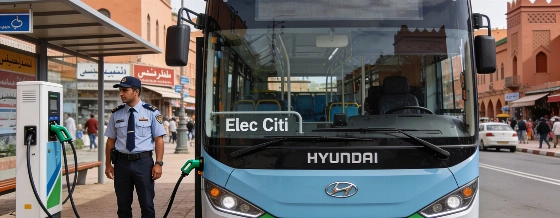
Fifteen Hyundai Elec City electric buses are coming to Marrakech through a KOICA-led project, marking the first South Korean electric buses in Morocco and backing the country's push to cut emissions.
Marrakech is about to see a new kind of bus on its roads. Hyundai Motor will deliver 15 Elec City electric buses to the city, putting South Korean technology at the center of Morocco's public transport overhaul. This move is part of Morocco's push to cut urban emissions. The Ministry of Energy Transition and Sustainable Development calls the project a key step in the country's plan for cleaner city transport. It fits with Morocco's promises under the Paris Agreement and its Nationally Determined Contributions, according to the Moroccan state news agency MAP.
The deal comes through an Official Development Assistance project led by the Korea International Cooperation Agency (KOICA). It's not just about new buses. The project will bring fast-charging stations and set up a local training program for drivers and maintenance crews. These steps are meant to make electric buses a real part of daily life in Marrakech, not just a short-term trial. KOICA says this is the first time South Korean electric buses will run in Morocco. The project could become a model for other cities in the Maghreb, as recent statements from the Ministry of Interior suggest.
Deployment in Marrakech's busiest areas
The Elec City buses will run on routes through Marrakech's main tourist and high-traffic districts. This is the first time electric buses made in South Korea will operate in Morocco. The first two buses are already finished and were handed over at Hyundai's Jeonju plant. The rest are still in production and will be shipped later. A local delivery event is planned for the first quarter of 2027, according to KOICA and the Marrakech city council. The project's schedule matches Morocco's wider urban transport reforms, which have been reviewed by the United Nations Economic Commission for Africa (UNECA).
Morocco has set tough climate goals: a 45.5% cut in greenhouse gas emissions from business-as-usual levels by 2030, and full carbon neutrality by 2050. The Hyundai-KOICA project is meant to help Marrakech meet these targets. It shows how international partnerships can speed up the move to low-carbon city transport. These goals are laid out in the latest national climate action plan, available on the official Moroccan government portal.
Building more than just a bus fleet
KOICA's role goes beyond buying buses. The agency will install fast chargers and handle technical support. It will also train local teams to run and maintain the buses. This is meant to keep the buses running well after the launch, avoiding the problems that often hit donor-funded projects. The Moroccan Agency for Sustainable Energy (MASEN) and the Ministry of Equipment and Water both back these kinds of projects. They see them as key to Morocco's renewable energy and transport electrification plans, as reported by the Maghreb Arab Press (MAP).
Hyundai Motor's Park Cheol-yeon, who leads the Global Commercial & LCV Business Division, says the project will help expand electric public transit and support sustainable transport. KOICA's Do Young-ah, director of Regional Project Division 2, hopes the project will help spread eco-friendly public transit across Morocco and North Africa. Morocco's ambassador to South Korea, Chafik Rachadi, points out the importance of bringing Hyundai's electric buses to Marrakech, a city that hosted COP22 and is a major economic and cultural center. The project has also caught the eye of regional outlets like Tunis Afrique Presse (TAP) and Algeria's APS, who see it as a possible model for electrification in nearby countries.
Regional trends and what comes next
The Hyundai-KOICA project is part of a bigger move toward electric transport in Morocco. Other recent projects include the deployment of off-grid solar EV charging stations. This project stands out because it focuses on both the vehicles and building local skills, aiming for a lasting system for electric public transport.
The first two buses are done, and the rest are due by early 2027. The next few years will show if this approach can work in other Moroccan cities and across North Africa. The real test will be whether these buses become a regular part of Marrakech's transit system, helping Morocco reach its climate goals and setting an example for the region. For now, Hyundai's move into Morocco's public transport is a clear bet on the future of city mobility in the Maghreb. It could change how cities in the region build sustainable infrastructure.