
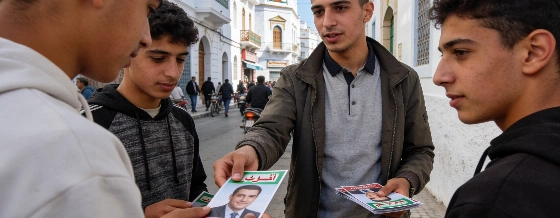
Morocco's September 23 parliamentary election will show if Gen Z's protest movement can turn anger over jobs and public services into real political power. Young candidates and new parties are taking on old political habits.
Morocco's political old guard is facing a new kind of challenge. Young activists, many fresh from last year's Gen Z-led protests, are swapping protest banners for campaign flyers. With the September 23 parliamentary election coming up, these candidates hope the energy from the streets can finally break into formal politics. The Ministry of Interior is running the election, and the Moroccan News Agency (MAP) is keeping watch. There are 27 parties fighting for 395 seats in the House of Representatives. Official numbers put the voter roll at 15,801,162 (The New Arab).
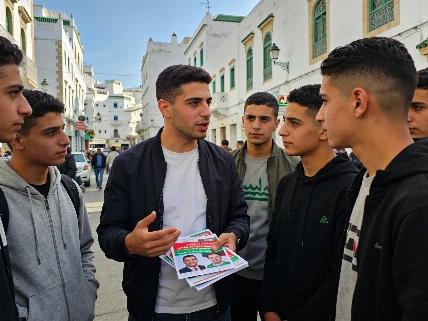
Hamza El Kharroubi, 28, used to protest. Now he leads the Environment and Sustainability Party and is out campaigning in Tetouan. He wants to turn youth energy into seats in parliament. The campaign started on September 10, 2026, according to the Ministry of Interior. Many see this election as a test: can Morocco's youth demands finally make it into law? MAP has pointed out the record number of young candidates and the scramble by parties to win over first-time voters.
From protest to the ballot box
This surge started after a tragedy. On September 27, 2025, eight women died after Caesarean deliveries at a public hospital in Agadir. The deaths set off protests across the country. People were angry about public healthcare, education, jobs, and daily living. The movement, calling itself GenZ 212, organized online through Discord, TikTok, and Instagram. They called for real reforms and an end to corruption. The unrest left at least three people dead in October 2025, according to EFE. For many young Moroccans, it showed how far they are from real decision-making. By September 2026, the protests had faded. Government pushback and the struggle to keep momentum going played a part (EFE via Infobae).
But the numbers tell a tough story. Out of 15.8 million registered voters, only about four percent are aged 18 to 24. That's just 632,000 out of 3.85 million Moroccans in that age group. People over 60 make up more than 29 percent. This gap is a big worry for youth activists. Africa Intelligence Brief and regional analysts have flagged it. In the last election, turnout barely topped 50 percent, according to the Ministry of Interior. Gen Z candidates now face two battles: winning seats and convincing their peers that voting matters at all.
Youth candidates demand real influence
Az-el Arab Hilmi, 32, from the Federation of the Democratic Left (FGD), says young Moroccans are tired of old political talk and empty promises. They want real changes: better schools, public healthcare that treats people with dignity, real jobs, and fair chances. Hilmi got into politics in 2016, inspired by Omar Balafrej's open and direct approach. Balafrej won a Rabat seat that year and later joined GenZ 212 for an online talk about democracy and youth responsibility. These digital forums are now common as parties try to reach young voters online.
But Hilmi says parties can't just put young faces on posters and call it a day. Youth involvement has to be real if it's going to last beyond election season. The Moroccan Economic, Social and Environmental Council has called for deeper youth participation in public life and policy, as reported by MAP and regional news wires.
Inherited disengagement and economic frustration
For many, political apathy runs deep. Moubarak Toumi, 18, joined the Socialist Union of Popular Forces in Casablanca-Settat. He says older generations always told him to "walk close to the wall"-keep your head down, avoid trouble, and focus on stability. This attitude, mixed with broken promises on healthcare, education, and jobs, has kept many young people out of politics. Official numbers show youth unemployment at 37.2 percent for ages 15 to 24 in 2025. The national rate is 13 percent, according to the High Commission for Planning (HCP) and the United Nations Economic Commission for Africa (UNECA).
Toumi thinks joining a party is one way to break out of this cycle. But the gap between protest demands and real policy is still wide. The monarchy still holds the main institutional power, while elected governments handle public policy and laws. The Ministry of Youth, Culture and Communication has started programs to get young people involved, but without bigger changes, the impact is small.
Limits of electoral change and the path forward
Hilmi is clear about what elections can and can't do. No party can fix everything right away. But parties should keep their promises, explain what they can't do, and act openly and honestly. For him, voting is just the start. Citizens-especially young ones-should keep watch, ask questions, criticize, and demand answers. An election is not a blank cheque.
Morocco's youth-driven political push stands out in a region where generational divides run deep. In Algeria, sudden reversals of education reforms have shown how fragile top-down changes can be, as reported earlier. In Morocco, the big question is whether Gen Z's push for real power can survive the grind of parliamentary politics, or if the energy from the streets will fade after the votes are counted. This election will show if Morocco's system is ready to let a restless generation in, or if the cycle of protest and disappointment will keep going. So far, unless parties give young people real power and responsibility, the gap between the street and the state will stay wide. Morocco's future may depend as much on what happens outside parliament as inside it.