
The Bordeaux-Aquitaine-Morocco association is back in action in Bordeaux. Both sides now want to turn old connections into real economic, cultural, and academic projects that matter.
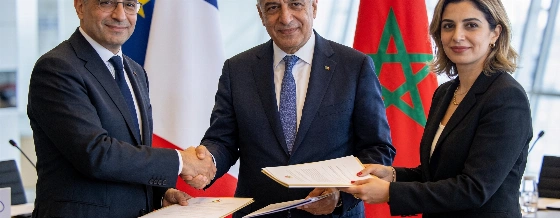
The Bordeaux-Aquitaine-Morocco (BAM) association is back. After years of silence, the group relaunched in Bordeaux on Friday. Moroccan and French leaders say this time, they want results, not just talk. Both sides are pushing to turn decades of goodwill into real projects that benefit people in both regions. Morocco's regional diplomacy is picking up speed. The Moroccan Ministry of Foreign Affairs and the Maghreb Arab Press (MAP) have both pointed to the need for local partnerships to make ties across the Maghreb stronger.
This relaunch has a clear goal. BAM wants to bring together economic, academic, cultural, and community players for projects that make a difference. Mohammed Boukhaled, now president of BAM and a former top executive in big financial firms, says the association must become a real tool for both Aquitaine and Moroccan institutions. He called for less talk and more action. He wants to see projects that have a real impact. This matches what the United Nations Economic Commission for Africa (UNECA) has been saying: cross-border partnerships need to show real results, not just promises.
Legacy and new momentum
BAM started in 1981 under Michel Laurent, a former Bordeaux official. For over forty years, it has linked Bordeaux, its region, and Morocco. The relaunch is not just about honoring the past. Nouzha Sahel, Consul General of Morocco in Bordeaux, called BAM a "living heritage of relations between Bordeaux and Morocco". But she said it now needs to support new, forward-looking projects. Sahel wants to use economic, academic, and cultural cooperation to build deeper ties. She called for Moroccan and Franco-Moroccan talent, business owners, academics, and researchers to step up as a bridge between the two countries. This fits with Morocco's Ministry of Higher Education, which has recently grown its academic exchange programs with European partners.
Laurent, now honorary president, said the group must move past ceremony. He wants BAM to focus on real, lasting projects, especially in culture and business. This push for substance is part of a wider trend. The Algeria-France bilateral evolution covered by APS shows that practical cooperation is now taking priority over protocol in the region.
Strategic priorities and regional stakes
The relaunch comes as Morocco and French regions, especially Nouvelle-Aquitaine, are building new links. Organizers have picked out urban planning, culture, climate adaptation, education, and business partnerships as top areas for action. BAM's leaders believe that by working on these fronts, both regions can play to their strengths and tackle shared problems. Morocco's "Villes Vertes" urban development program, highlighted by MAP, is seen as a model for sustainable city partnerships. This could match well with Nouvelle-Aquitaine's own climate plans.
This new push for regional cooperation stands out against the usual political noise in Franco-Maghreb relations. Recent coverage has focused on political rhetoric and shifting priorities. BAM, though, is about practical work, not posturing. Its agenda lines up with the African Union's Agenda 2063, which calls on local groups to build people-to-people and business ties across Africa.
Now that BAM is officially back, the real challenge is turning plans into action. The stakes are clear. If BAM can rally partners and deliver real projects, it could set a new example for regional ties between France and Morocco. If not, this relaunch could end up as just another missed chance, lost among many well-meaning but empty efforts. In the end, BAM will be judged by the real projects and partnerships it creates-not by ceremonies or speeches.