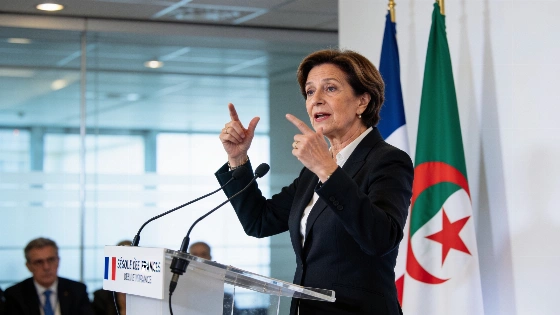
Ségolène Royal, head of the France-Algeria Association, has sharply criticized segments of France's political class for reviving neocolonial attitudes and using Algerophobia as a campaign tool, warning this risks undermining both domestic priorities and bilateral relations.
With France's 2027 presidential election approaching, Ségolène Royal, president of the France-Algeria Association, has warned that some French politicians are deliberately fueling anti-Algerian sentiment to win votes. She argues this tactic revives the country's neocolonial past and distracts from urgent domestic and diplomatic issues. Royal's comments, aired by AL24 News and reported by Le Soir d'Algérie, have drawn attention across the Maghreb, where colonial history remains a sensitive subject for both officials and the public according to regional coverage.
Royal's remarks come as French voters face rising fuel prices, growing public debt, and a strained healthcare system. The government, led by Finance Minister Roland Lescure, recently lowered its 2026 growth forecast to 0.5%, with the budget deficit expected to exceed 5% (AFP, Bloomberg). Royal says that instead of addressing these problems, some politicians are choosing to stoke anti-Algerian feeling. She has made it clear she intends to challenge this approach, stating she "will not allow the instrumentalization of Algerophobia during the electoral campaign."
Neocolonial rhetoric and political calculations
Royal's criticism is not aimed only at the far right. She points to a wider group within France's political class, including a former prime minister now seen as a possible 2027 presidential candidate, who has started questioning the 1968 Franco-Algerian agreements without offering clear reasons. These agreements remain central to migration and residency rules between the two countries. Recent French debates have linked them to disputes over the return of Algerian nationals facing expulsion and to consular laissez-passer issues, as reported by El Echorouk and the Algerian Press Service (APS).
She argues that topics like the hijab are being used to distract from France's slipping international education rankings, pressure on the pension system, and rising public debt. Royal says that successive governments have failed to address these structural problems, and the current political climate risks pushing them further aside. The Tunis Afrique Presse (TAP) has also noted that this kind of rhetoric can strain social cohesion within France's large Maghrebi diaspora.
France-Algeria relations and regional stakes
Royal insists that France should focus on strengthening its relationship with Algeria. She describes Algeria as a "major regional country and a gateway to Africa," and calls for "intelligent partnerships" that move beyond old hostilities. She urges French diplomacy to prioritize reconciliation and constructive engagement with the Maghreb and Africa, rather than interfering in regional disputes. This view echoes recent statements from the Algerian Foreign Ministry, which has called for dialogue and mutual respect, especially as Algeria works to diversify its economy away from oil and gas, according to APS.
Diplomatic tensions in the region have also grown. In September 2026, Algeria cut diplomatic ties with the United Arab Emirates and closed its airspace to Emirati aircraft, a move confirmed by the Algerian Ministry of Foreign Affairs and covered by Ahram Online. The Algerian Foreign Ministry said it had "exhausted all means" to preserve relations before taking this step, highlighting the fragility of regional alliances and the need for diplomatic caution.
Editorial perspective
Royal's refusal to let Algerophobia become a campaign tool is a test of whether France's political class can move past colonial reflexes and address the realities of a changing electorate and region. With both France and Algeria facing internal pressures, reviving old antagonisms risks adding to instability on both sides of the Mediterranean. The African Union's Peace and Security Council has repeatedly called for constructive engagement and regional cooperation to address shared challenges in the Maghreb and Sahel.