
Algeria's government has abruptly scrapped sweeping school timetable and curriculum changes just weeks before the new term, forcing educators to revert to a two-decade-old system and exposing the presidency's direct grip over education policy.
Algeria's education system was thrown into disarray this week as the Ministry of National Education, under direct orders from the presidency, cancelled a raft of school reforms announced in July-just twelve days before the new academic year is set to begin. The move instantly nullified months of planning and left teaching teams scrambling to reconstruct schedules and lesson plans for nearly 11 million pupils.
The reversal was triggered at the highest level. The Council of Ministers, meeting on 6 September, concluded that schools must remain insulated from ideological and political disputes. President Abdelmadjid Tebboune reportedly insisted on this point, prompting Minister Mohamed Seghir Saâdaoui to sign off on arrêté No. 36 on 9 September, repealing the July reforms and every circular issued under them. The legal basis for this intervention remains the orientation law of January 2008, which grants the minister authority over timetables and coefficients-but the real power was exercised by the presidency.
Key measures scrapped and immediate fallout
The now-cancelled July order, arrêté No. 20, had redrawn the entire structure of general and technological secondary education. Among its most controversial provisions: English would have become the sole foreign language in third-year primary, with French delayed by a year, and philosophy would have been removed from the curriculum for terminale mathematics students. Both measures provoked strong opposition from teachers and parents, especially the sidelining of philosophy, which was seen as a political statement. With the new repeal, all such changes are void, and the 2006 framework-arrêté No. 186-returns as the governing standard for the 2026-27 school year.
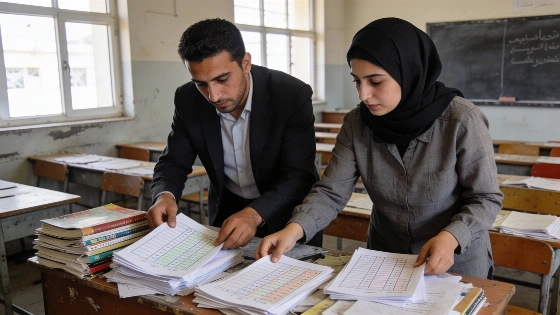
For schools, the operational consequences are immediate and severe. Documents, timetables, and annual progressions painstakingly prepared over the summer must be rebuilt from scratch, now based on a twenty-year-old system. The administrative churn is nationwide, affecting every education directorate and school. The only elements left standing from the summer's announcements are the proposed computer-science track at lycée and robotics clubs, which remain under review with further details yet to be published.
Presidency asserts control over education policy
This episode exposes the true locus of authority in Algerian education. While the Ministry of National Education formally issues decrees, the Council of Ministers-and ultimately the presidency-sets the direction and can override published reforms at will. The abrupt U-turn demonstrates the presidency's willingness to sacrifice administrative certainty and teacher preparation to settle political arguments about the classroom. The start date for pupils, already shifted to 21 September by presidential decision in August, is another sign of top-down control.
For families and educators, the core question is now stability. With the 2006 grid restored and all summer circulars voided, attention turns to the ministry's next moves-especially on the informatique track and other promised innovations. The official bulletin will soon formalize the repeal, but the real test will come as schools reopen and attempt to deliver a coherent year under a system designed for a different era.
Algeria's last-minute reversal is not just a bureaucratic hiccup-it is a clear signal that education policy remains a political battleground, subject to presidential intervention at any stage. The cost is paid by teachers and students, who are left to improvise in the face of shifting directives. Until the government demonstrates that its reforms can survive more than a single summer, the promise of educational stability in Algeria will remain unfulfilled.