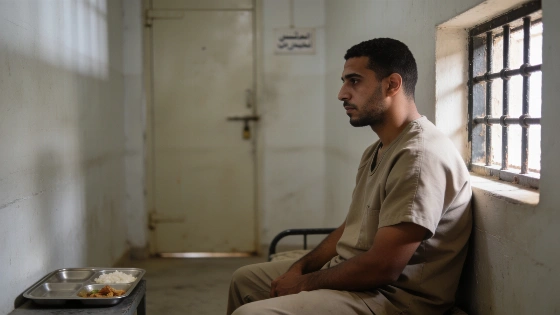
Ennahda says prison authorities have restricted political prisoners' access to independent media as Ahmed Nejib Chebbi begins an open-ended hunger strike. The protest renews calls for prisoners' release and an end to political trials, amid wider debate over press freedom and the 2022 cybercrime decree.
Ahmed Nejib Chebbi began an open-ended hunger strike on 1 October 2026, according to statements from his family and opposition groups. He is 82, reports say. Chebbi is protesting restrictions on political prisoners' access to independent information. His family says inmates are left with newspapers and television channels that reflect the authorities' position. That claim has not been independently established.
Ennahda expressed solidarity with Chebbi, a leader of the National Salvation Front. The party says the reported restrictions cut prisoners off from independent news and the outside world. Tunisia's public news agency, Tunis Afrique Presse, is one of the country's regional news wires. The agency's role does not verify the claims about prison access, which remain attributed to Chebbi's family and Ennahda.
In a statement issued Thursday, Ennahda called the measure a reversal of gains prisoners made after the revolution. It also argued that the measure contravenes Tunisian law and international conventions. The dispute goes beyond which publications enter the prison. Ennahda says the reported limits leave political prisoners with media that reflect the state's position.
The distinction matters. Ennahda renewed its call for the immediate and unconditional release of political prisoners and an end to political trials. The party says those trials have damaged Tunisia's international standing. The case is part of a wider opposition critique of prosecutions and political proceedings. Ennahda leader Rached Ghannouchi has also been in prison since 2023, according to Reuters-linked reporting.
Decree-Law 2022-54, Tunisia's cybercrime measure, has drawn criticism from rights and press-freedom groups over its use in cases involving journalists and government critics. Reuters reported on 30 September 2026 that President Kais Saied had eased penalties for spreading false information under the decree. The change reduced potential prison exposure. It did not repeal the law. Chebbi's protest falls within a wider debate over speech and access to information, but the available information does not establish that the decree governs prison media rules.
The regional context is political as well as economic. A 1989 treaty established the Arab Maghreb Union and set out a framework for cooperation among Tunisia, Algeria, Libya, Morocco and Mauritania. The UN Economic Commission for Africa, or UNECA, also treats regional integration as a development concern. No link is established between those frameworks and Chebbi's case. Available reporting does not connect the prison restrictions to trade or investment outcomes.
A separate regional file on Libya's industrial agenda covered the Juliana sugar plant deal. Tunisia's current dispute concerns political rights and access to information, not investment.
Ennahda's allegation is clear: prisoners are being denied independent news sources, and Chebbi is protesting the restriction with a hunger strike. Whether access rules change depends on decisions by the relevant Tunisian authorities. Ennahda has also repeated its demand to end political trials and release people it considers political prisoners.