
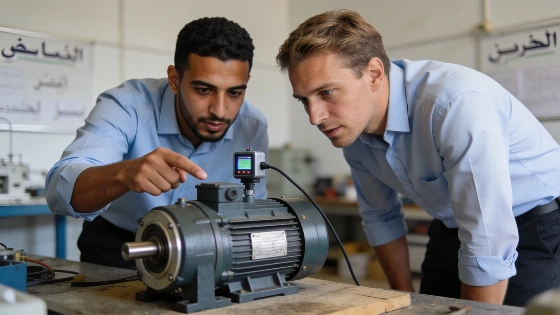
At the third Innovation Talks in Tunis, Italian and Tunisian startup founders discussed how AI and other technologies could improve industrial monitoring and energy efficiency. The event took place as energy and innovation ties between the two countries continue to grow.
At Terna Innovation Zone Tunisia, startup founders discussed how new technology could help monitor industrial plants, plan maintenance and track energy use.
The third Innovation Talks took place inside Spazio Italia. Nicandro Buono, co-founder of Italian startup eMomentum, and Dhaker Hadded, co-founder of Tunisian company Orbit Engineering Solutions, discussed possible applications. Wassim Ben Larbi moderated.
It was the first Innovation Talk held directly at Terna Innovation Zone headquarters. Italy's ambassador to Tunis, Alessandro Prunas, said closer links between the countries' innovation ecosystems could help tackle challenges in energy efficiency and industrial processes.
Terna opened the Tunis hub in January 2025. It was the company's first Innovation Zone in Africa. The hub is meant to support startups, training and skills development tied to Tunisia's energy and digital transition. It also aims to foster cooperation between companies, universities, research centres and industrial operators in both countries. The Italian news agency AGI has reported on earlier startup meetings there, which focused on AI, sustainability and emerging technologies.
The hub gives the initiative a base beyond a single event. It can connect startup work with Tunisia's industrial and energy transition. AGI estimates that Italian initiatives in Tunisia had a wider portfolio worth about €671 million in 2025. Innovation and energy cooperation sit within that broader bilateral investment relationship.
The talks also fit into the wider Italy-Tunisia energy partnership. One project is ELMED, a planned 600-megawatt undersea interconnection being developed by Terna and Tunisia's national utility, STEG. The cable would stretch about 220 kilometres and allow electricity to flow in both directions. It would be the first direct electricity link between Europe and North Africa. The project puts Tunisia's energy security and regional grid integration in view.
ELMED has received €307.6 million through the European Union's Connecting Europe Facility and $268.4 million from the World Bank. An industry report says Terna and STEG awarded Hitachi Energy work on converter stations in Italy and Tunisia in June 2026. Commissioning is expected by 2028. These milestones are separate from the startup talks, but show the longer-term energy partnership where digital tools could find practical uses. IWR has reported the project details and timetable.
The interconnector also matters to Tunisia's efforts to reduce reliance on imported energy and bring renewable power into a wider Euro-Maghreb market. Its planned two-way capacity could help balance electricity across borders. The talks themselves, though, focused on industrial monitoring and efficiency, not power trading.
Tunisia's digital agenda is separate from other parts of its economic development, including the phosphate recovery plan. This initiative is about industrial monitoring, technology and energy use, not mineral output.
The talks tied innovation cooperation to practical industrial needs. Italy and Tunisia have a dedicated hub and a stated focus on startups and skills. STEG's role in ELMED points to the parallel work on grid infrastructure. The test is whether industry adopts the resulting solutions. That will show how much the digital effort adds to the wider energy partnership.