Libya has moved to boost its domestic sugar production by contracting Germany's BMA to build a modern processing plant in the Juliana Free Zone, aiming for 2500 tons daily capacity and a 24-month completion timeline.
Libya has taken a concrete step to expand its food-processing sector, signing a contract with Germany's BMA to build a sugar plant in the Juliana Free Zone. The facility is designed for a daily output of 2,500 tons. Project Manager Mohamed Ben Attia signed the agreement, which moves the project from planning to construction. The Juliana Free Zone confirmed the deal, and regional media reported on it, but as of mid-September 2026, neither BMA nor Libya's Ministry of Industry and Minerals had issued their own statements, according to the Libya Herald and the official Libyan news agency LANA.
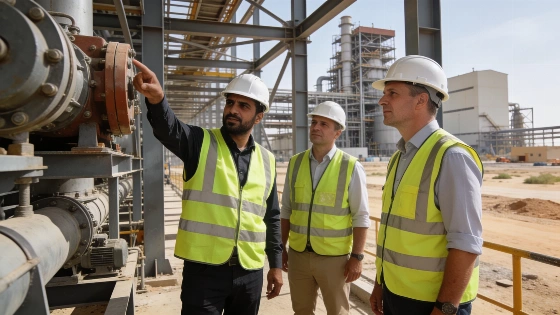
The Juliana Free Zone stated that the contract with BMA, a German company specializing in sugar manufacturing technology, marks the official start of construction. The plant will be built in Juliana, with a 24-month deadline for completion. Ben Attia said preparations are underway to set up a production site that meets modern technical standards. The project fits into Libya's broader industrial recovery plans, as outlined by the Ministry of Economy and Trade, and matches regional efforts to diversify economies, as tracked by Tunis Afrique Presse (TAP) and the UN Economic Commission for Africa (UNECA).
Strategic goals and economic stakes
The main aim is to reduce Libya's dependence on imported sugar by producing it locally. With a planned output of 2,500 tons per day, the plant is intended to meet domestic demand and, in time, supply regional and international markets. The project is also expected to create jobs, support local manufacturing, and encourage growth in the wider food-processing sector. According to the Libya Herald, the plant could become a new industrial anchor for the Juliana region and help Libya cut its trade deficit in key goods-a goal mentioned by the Arab Maghreb Union and the Algerian Press Service (APS).
The Juliana Sugar Project is part of a larger effort to diversify Libya's economy and strengthen its industrial base. It follows recent moves to attract foreign expertise and investment into strategic sectors, such as the recent expansion of Libya's energy assets. Regional news outlets, including Morocco's MAP, have noted that projects like this are becoming central to North African economic policy, as governments try to balance food security with industrial growth.
Implementation timeline and future prospects
The contract sets a 24-month deadline for completion, after which the plant is expected to become a key part of Libya's sugar supply. Project leaders say the facility will be a modern, integrated operation, designed to meet current needs and support future exports. The agreement with BMA moves the project from concept to construction and could lead to further industrial development in the Juliana Free Zone. Libyan authorities and regional economic groups will monitor progress, with updates expected from the Ministry of Economy and Trade and the African Union's economic programs.
Libya's choice to work with a German technology provider reflects a practical approach to industrial development. If the Juliana Sugar Plant is finished on time and works as planned, it could serve as a model for future projects aimed at rebuilding and diversifying Libya's manufacturing sector. The outcome will show whether this project can help reduce Libya's reliance on imports and support the country's economic recovery.