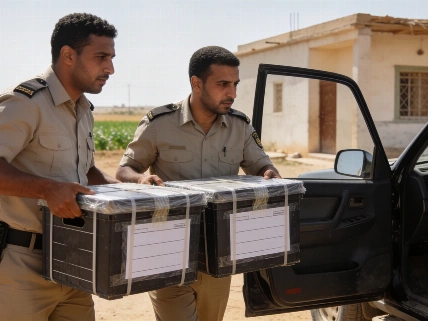

The brigade says troops seized more than 1.3 million pills in Kufra on October 10, 2026, after a firefight left three soldiers injured. Officials have not identified the substance or disclosed the shipment's value.
The firefight unfolded in Kufra, a southeastern town about 1,700 kilometres from Tripoli. More than 1.3 million narcotic pills were seized during the clash between suspected smugglers and the Subul al-Salam infantry brigade on October 10, 2026. Three soldiers were injured, according to the brigade's statement, as Reuters reported.
The brigade's media unit said troops targeted hideouts used by traffickers dealing in narcotics and other illicit goods. Images released by the unit showed bags of round white pills, some marked as made in Germany. Officials did not identify the substance or give an estimated value for the haul, leaving its market worth unclear.
Libya Review reported that several suspected smugglers were detained. Their names have not been released. Authorities have not said whether charges were filed or whether court proceedings followed, so the arrests do not establish a conviction.
Subul al-Salam operates within the eastern Libyan Land Forces structure and is associated with forces commanded by Khalifa Haftar. Kufra's remote position in Libya's southeast makes security operations there part of a wider challenge along the country's border regions. The seizure shows the scale of this reported interdiction, but without an official valuation it cannot establish the shipment's market value or the financial impact on trafficking networks.
The United Nations has described Libya as a significant regional transit point for synthetic drugs and other prohibited substances destined for domestic use or markets elsewhere in Africa. UNODC has linked the persistence of trafficking networks to the instability that followed the 2011 uprising. The assessment points to a cross-border problem that cannot be measured by a single seizure and requires sustained law-enforcement and judicial capacity.
A separate operation involving Iraqi intelligence is not known to be connected to the Kufra case. Iraq's Ministry of Interior said intelligence cooperation helped Libyan authorities intercept 1.2 million Captagon pills and detain one Libyan suspect, as detailed in this earlier report. That separate account describes cross-border information-sharing, but does not establish a link between the two shipments.
In another case, Libya's attorney general said in October that a court in the Western Mountains region had sentenced five people to death for importing more than two million psychotropic pills. That judgment concerns a separate case and does not establish the legal status of those detained in Kufra.