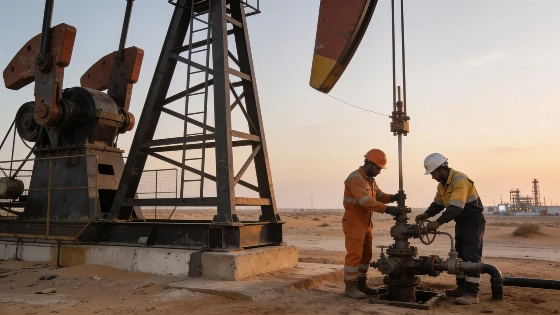
OMV has declared its Essar well in Libya's Sirte Basin commercially viable, unlocking up to 45 million barrels of recoverable oil and accelerating the country's push to revitalise its energy sector after years of stagnation.
Libya is taking steps to rebuild its oil industry, and OMV's latest announcement gives that effort a boost. The Austrian energy company has confirmed that its Essar well in the Sirte Basin is commercially viable. Technical and economic reviews point to as much as 45 million barrels of recoverable oil, with the field expected to produce about 6,000 barrels per day once fully developed. OMV made the announcement together with Libya's National Oil Corporation (NOC), and the news has been reported by the Libyan Ministry of Oil and Gas and the Maghreb Arab Press.
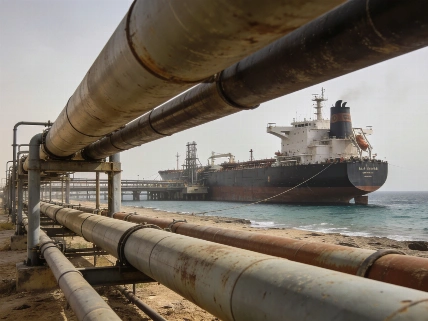
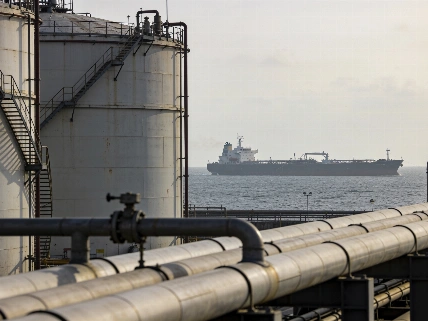
The Essar well sits in concession area C 103 and will be developed by Zueitina Oil Company. OMV holds a 12% stake. The field is close to existing production and processing facilities, which should help speed up commissioning and keep costs down-a practical advantage in a region where logistics often slow new projects. Independent energy newswires have confirmed the project's commercial value within Libya's established oil-producing region.
Libya's energy sector regains momentum
After years of instability, Libya's oil sector is showing signs of recovery. Current output is about 1.4 million barrels per day, according to NOC figures cited by Reuters, though some fields still face occasional protests and shutdowns. NOC aims to reach 1.6 million barrels per day by the end of 2026, with a longer-term goal of 2 million. International partnerships are a key part of this plan. OMV's ongoing work with NOC and the recent return of exploration after a decade-long pause reflect this approach. The Tunis Afrique Presse has also noted Libya's push to attract foreign investment and update its energy sector.
Libya has the largest proven oil reserves in Africa and is fifth in gas reserves. The government's efforts to bring in foreign partners are already showing results. Eni, working with NOC through Mellitah Oil & Gas, has started new hydrocarbon production thanks to the Sabratha Compression Project, which has increased gas output from the offshore Bahr Essalam field. The latest bid round-the first in eighteen years-has attracted strong international interest. Five blocks have been awarded, and new production sharing agreements have been signed with Spain's Repsol, Turkey's TPAO, QatarEnergy, and MOL Group. Details are available from the Libyan National Oil Corporation.
Strategic partnerships and operational advantage
OMV's executive vice president for Energy, Berislav Gašo, called the Essar discovery a major step for OMV and its partners at NOC, pointing to the importance of technical expertise and long-term cooperation in developing Libya's resources. The field's location near existing infrastructure should allow for faster and more cost-effective integration into Libya's production network. This approach follows regional best practices promoted by the African Union's energy programs and matches recent recommendations from the UN Economic Commission for Africa.
OMV has worked in North Africa for fifty years, focusing on upstream growth and close cooperation with local partners. Its renewed activity in Libya signals confidence in the country's stability and resource potential. As reported earlier, NOC has been seeking international technology and expertise to modernize its sector and speed up production gains.
What this means for Libya and the region
The Essar well's commercial success is a sign that Libya's energy sector is starting to recover after years of conflict and underinvestment. With international companies returning and new discoveries moving forward, Libya is working to regain its position in the global oil market. Whether these gains can last will depend on how the country manages ongoing political and security challenges. For now, OMV's find is a concrete step forward, showing that partnerships remain central to Libya's energy recovery.