
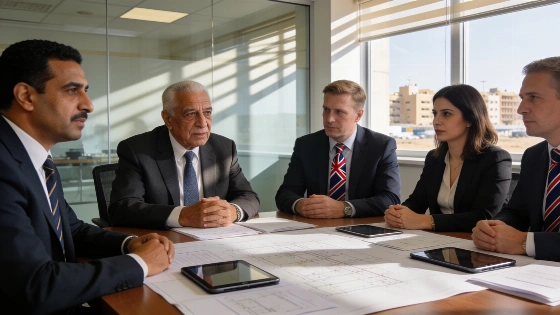
Libya's National Oil Corporation is moving to secure advanced British and international technology for its oil and gas sector, aiming to accelerate production, modernise infrastructure, and build national expertise through direct cooperation with industry giants.
Libya's National Oil Corporation (NOC) has shifted from diplomatic talks to direct action, telling its technical teams to start working immediately with British and international energy companies. The aim is to turn high-level meetings into real projects that can upgrade Libya's oil and gas sector and show results on the ground. According to OPEC data from August 2026, Libya's oil production reached 1.397 million barrels per day. While this is a slight increase, it remains below the targets set by Libyan authorities and the NOC, underlining the need for better technology and more efficient operations (Africa Oil & Gas Report).
Chairman Masoud Suleiman has made it clear that vague promises are no longer enough. At a recent summit in Tripoli, attended by senior NOC officials, the British Embassy, and representatives from BP, Shell, KBR, Vitol, Glencore, and the Libyan British Business Council, the message was direct: Libya wants technology, expertise, and practical know-how. The presence of the British Embassy and the Libyan British Business Council adds political weight to these talks, a point also noted by regional media such as the Algerian Press Service (APS) and Tunis Afrique Presse (TAP), which have followed similar efforts across the Maghreb.
Direct engagement with global energy leaders
Instead of relying on broad cooperation agreements, the NOC is asking each company for specific solutions. Departments have been told to identify what the sector needs and match those needs with the strengths of their British and international partners. The focus is clear: raise oil and gas output, modernize facilities, and bring in advanced asset management and safety systems. This is especially urgent as Libya faces ongoing infrastructure risks. The NOC recently warned of possible force majeure after a third drone attack on the Al-Zawiya refinery on 12 September 2026, an incident that could disrupt production plans (Libya Observer).
Top priorities include upgrading infrastructure, improving maintenance, and using new technologies. Training and knowledge transfer are also part of the plan, with the NOC aiming to develop a new generation of Libyan technical specialists who can keep the sector running in the future. The UN Economic Commission for Africa (UNECA) has also stressed the need for local expertise to secure long-term energy stability in North Africa.
Strategic context and competitive pressure
This push for British-led technology comes as Libya faces more competition for foreign expertise and investment. The NOC's approach is similar to recent efforts to attract other international partners (reported earlier), but the focus on UK and global energy companies shows a desire to diversify sources of innovation and avoid relying too much on any one partner. Foreign investors still see potential in Libya's energy sector. A major $2.5 billion industrial project in eastern Libya has already finalized gas supply agreements for its first phase, according to Reuters and the Ministry of Economy and Trade of Libya.
For British companies, the opportunity is significant. Libya's large reserves and urgent need for modernization offer a rare opening, but only those who deliver real results-not just consultancy-will be included. The NOC's leadership is making it clear that talk alone will not unlock Libya's energy potential. Regional analysts at Morocco's MAP news agency note that similar demands for accountability and technology transfer are shaping energy partnerships across the Maghreb.
Operational consequences and what to watch
If the NOC's new approach works, Libya could see higher production and better efficiency, which would affect government revenues and regional energy markets. Security risks remain a challenge. In September 2026, a drone attack on the Brega fuel depot in Tripoli led the NOC to activate emergency protocols and empty storage tanks as a precaution, though there was no major damage. The main question is whether these meetings will lead to real projects and lasting technology transfer, or if they will end up as more unfulfilled agreements. For now, the NOC's push for accountability from its partners marks a clear change from past practices and signals a new way of doing business with major energy companies.