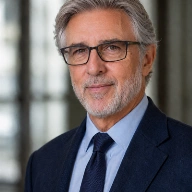
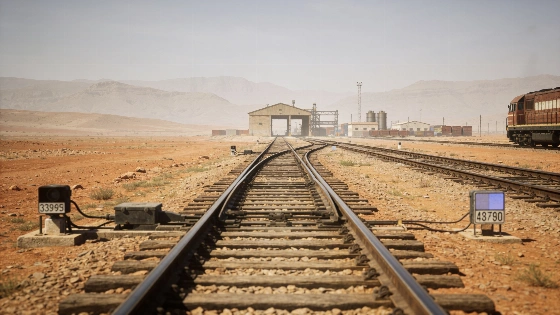
Faouzi Djoudi says Algeria's rail, road and logistics projects must link the coast with the interior and the South, while supporting productive hubs and domestic value chains. Recent phosphate and railway projects put that argument to a practical test.
At the upcoming Algiers International Book Fair, expected at the end of October, engineer Faouzi Djoudi is due to present two books on Algeria's development. He specialises in construction studies and civil engineering.
Djoudi argues that new connections must help regions produce, process and move goods. Roads, railways, energy networks and industrial hubs should link the coast with the High Plateaus and the South. Kilometres are not enough.
Algeria's official news agency, APS, has also pointed to the link between investment in infrastructure, production and human capital as part of sustainable growth.
Build corridors that serve regional economies
For Djoudi, a megaproject is more than a route between two points. Planning should bring transport together with energy, water, telecommunications, logistics, agriculture and industrial zones. The coast will remain an economic engine. Better connections inland could spread activity and bring the national market closer together.
Roads and railways alone will not turn the South into an export base. Djoudi points to the region's potential in agriculture, mining, solar energy, industry, logistics and tourism. To create economic value, those sectors need links to markets and more capacity to process goods locally. Projects should be judged by whether they create wealth and reduce regional disparities, not just by their size or cost.
A planned railway from El Meniaa through In Salah to Tamanrasset shows both the scale of the ambition and the challenge of delivering it. On 23 September 2026, the government reviewed preparations for construction and reaffirmed its target of putting the line into service by the end of 2028. President Abdelmadjid Tebboune had named it a strategic national priority on 6 September.
The project is divided into phases. They include the 495-kilometre Laghouat-Ghardaïa-El Meniaa section and a 213-kilometre Tamanrasset-Moulai Lahcen section. Radio Algérienne reported on the government's review and deadline. The deadline remains a target, not proof that the railway is already running.
Make each project build national capability
Djoudi treats past project experience as a source of lessons, not a record of failure. He calls for fuller technical, economic, land-use and environmental studies before construction. He also wants closer coordination to manage costs and schedules, along with steady investment in Algerian engineering and project-management skills.
International contractors can bring technology and experience, Djoudi argues. But Algerian firms and engineers should take part from design through construction, supervision and maintenance. A partnership should leave local companies and workers with stronger skills, as well as deliver completed infrastructure. APS coverage of national investment also connects physical infrastructure with production and human capital.
Algeria's mining and export plans offer a concrete example. The Annaba port terminal was reported as part of a national phosphate effort that links extraction, processing and shipping. On 23 September 2026, Algeria officially launched construction of the Integrated Phosphate Project. It covers Annaba, Souk Ahras, Tebessa and Bir el-Ater.
The stated plan is to integrate more of the phosphate chain at home, process more domestically, raise value added and support non-hydrocarbon exports. The launch is a step in that effort. Its economic impact will depend on how the project is carried out and how well mines, processing facilities and transport infrastructure connect.
Djoudi's wider diversification agenda includes manufacturing, agro-industry, mineral processing, pharmaceuticals, digital technologies and tourism. He sees potential in these sectors to reduce reliance on energy exports. The books approach the agenda from different angles. MEGAPROJECTS IN ALGERIA examines infrastructure and major works. ALGERIA: A NEW HORIZON looks at diversification, innovation, human capital and Algeria's international position, including greater openness toward Africa and the wider world.
For Djoudi, infrastructure has strategic value when it expands production, skills and regional opportunity. Building it is not enough. His books argue for that broader change. Whether Algeria achieves it will depend on the planning, coordination and local expertise he says are needed.