
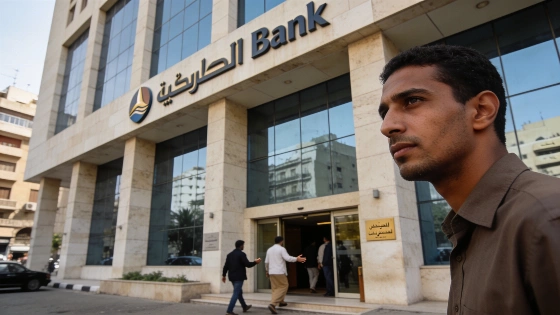
North Africa accounts for more than 46% of the capital represented in the ranking cited here. Egypt's largest lenders bring scale, while Moroccan banks have built a wider cross-border presence. The ranking's bank-level figures have not been independently verified against primary disclosures.
National Bank of Egypt is listed with $160.1 billion in assets, and Banque Misr with $82.5 billion. Both figures come from the ranking cited here. The ranking's regional shares and placements have not been independently confirmed against primary bank or regulator disclosures in the material available for this update.
Together, the two Egyptian banks are presented as larger than the banking sectors of many African countries. That comparison depends on the ranking's methodology and on the dates and definitions used for its balance-sheet data. The details matter.
Egypt has seven banks in the regional Top 20, according to the ranking. Morocco has eight, Algeria four and Tunisia one. Treat these as reported ranking results, not a newly verified assessment of the region's banks.
The article's cited macroeconomic figures put annual inflation at 28.3% in 2024 and GDP growth at 4.4% in 2025, up from 2.4% in 2024. It attributes a 4.2% growth forecast for 2026 to the IMF. Available IMF material confirms that its World Economic Outlook covers Egypt, Morocco, Algeria and Tunisia, but does not independently verify those specific figures or provide forecasts for the banks themselves. The WEO covers macroeconomic conditions, not bank rankings. See the IMF World Economic Outlook. High nominal interest rates can support interest income. Currency volatility and substantial government financing needs can weigh on funding costs, asset quality and balance-sheet management.
Moroccan banks have a wider reach beyond their home market, according to the ranking. Attijariwafa is listed second, Banque Centrale Populaire (BCP) third and Bank of Africa-BMCE fifth. The ranking also attributes operations in 27 countries and more than 12 million customers to Attijariwafa. It describes BCP and Bank of Africa as institutions expanding internationally. The bank-specific figures and placements still need confirmation from the institutions' own disclosures.
The article puts Morocco's estimated growth at 4.9% in 2025, supported by agricultural production and infrastructure investment, and average inflation at 0.8%. The available research context does not independently establish those exact estimates. The World Bank says Morocco has strengthened macroeconomic resilience and expanded infrastructure. It also notes persistent constraints: weak private-sector job creation, high youth unemployment, low female employment, regional disparities, recurring drought and water scarcity, and human-capital gaps.
The article cites infrastructure investment in the airport expansion programme, described as backed by the African Development Bank. The stated €270 million in financing has not been independently verified in the material available here. The World Bank analysis sets out the country's jobs and development challenges. Those estimates remain unconfirmed.
Algeria adds weight to the ranking, while Tunisia sits lower. Algeria's largest banks are listed in sixth, seventh and tenth place: Banque Extérieure d'Algérie, Banque Nationale d'Algérie and Crédit Populaire d'Algérie. Their reported scale strengthens North Africa's overall showing. The ranking describes Algeria's largest institutions as more domestically focused, but neither the placements nor that comparison has been independently checked against current bank disclosures.
Tunisia has no bank of comparable size in the cited ranking. Banque Internationale Arabe de Tunisie is listed as the country's highest-placed institution, at 17th in the region with $980 million. That placement and asset figure also await confirmation from primary sources.
Egyptian lenders have made some moves south. The article points to CIB's entry into Kenya, Banque Misr's expansion into Djibouti and Banque du Caire's longstanding presence in Uganda. These examples show a wider footprint. They do not establish the scale or financial contribution of the banks' operations outside Egypt.
North Africa's lead rests on Egypt's large domestic balance sheets and Moroccan banks' reported cross-border networks. Algeria adds to the region's overall weight. Tunisia's single top-20 representative shows how unevenly banking capacity is distributed. The ranking should be read alongside macroeconomic conditions and verified bank disclosures, not as a substitute for them. For later national policy announcements, relevant reporting and official communications include Morocco's MAP, Algeria's APS and Tunisia's TAP. This article asserts no new regulatory decisions or updated bank rankings.