
At the 8th Marrakech Airshow, Minister Delegate Abdeltif Loudyi set out Morocco's plan to expand beyond assembly into advanced aerospace manufacturing and engineering. Exports, Safran projects and a growing supplier base show progress, but the country has yet to prove it can take on more complex production work.
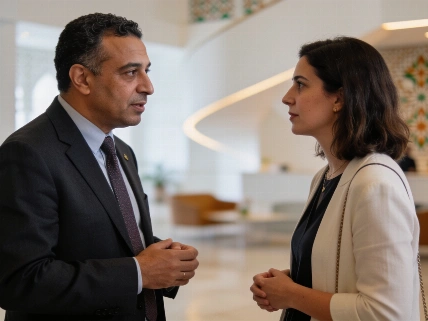
Nearly 200 exhibitors from 27 countries gathered for the opening of the 8th edition of the Marrakech Airshow. Minister Delegate Abdeltif Loudyi used the event to set out Morocco's aim: build aerospace capacity in advanced manufacturing and engineering, not just assemble aircraft parts.
The government wants Morocco to become a global hub for aircraft manufacturing and maintenance and to attract major international groups such as Boeing, Airbus and Pratt & Whitney. By 2026, the country's aerospace ecosystem included more than 150 companies, about 26,000 jobs and local integration exceeding 40%. The figures point to a broader industrial base, but they do not show that Morocco can manufacture an aircraft from start to finish.
Export data offer a clearer measure of growth. Morocco's Office des Changes reported aerospace exports of 29.087 billion dirhams in 2025, up 10% from 26.446 billion dirhams in 2024. Exports from assembly operations rose 11% to 19.129 billion dirhams, while electrical-connection systems increased 8.3% to 9.858 billion dirhams. From January to August 2026, Office des Changes figures put aerospace exports at 22.969 billion dirhams, up 21.5% year on year. Assembly operations brought in 15.874 billion dirhams, up 26.9%, and electrical-connection systems reached 7.019 billion dirhams, up 10.9%.
Loudyi described aeronautics, space and related technologies as ways to develop national industry. He credited King Mohammed VI's vision with driving the sector's progress and pointed to steps meant to organize the industry and encourage investment, including legal reforms. The government's stated goal is to increase Morocco's role in global aerospace production chains. DHL's market assessment also discusses the country's supply-chain profile, though Loudyi focused on aerospace manufacturing, not logistics.
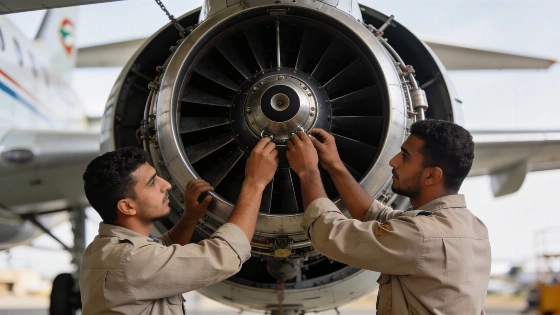
Investment announcements give that goal some weight. On October 13, 2025, King Mohammed VI launched construction of Safran's aircraft-engine manufacturing complex in the Midparc industrial zone near Casablanca. Moroccan government figures put Safran's cumulative investment in the country at more than €350 million. At the 2026 airshow, Safran signed a deal for a 120 million-dirham industrial unit. The facility is expected to create 100 jobs and make lubrication and flow-control systems for aircraft engines.
At the show, Boeing, Airbus, Lockheed Martin and Safran joined Moroccan institutions in an agreement to set up the Africa Center of Manufacturing Excellence. The center will develop research in advanced manufacturing and aerospace technologies. The initiative builds on cooperation launched with Boeing at the 2024 airshow. Other agreements covered an industrial and technology development platform involving Harmattan AI and plans to increase the share of Moroccan components in Royal Air Maroc's supply chain.
Loudyi also tied aerospace growth to airport upgrades, which he said would support tourism and prepare Morocco for major international sporting events. In defence, he said the country is prioritizing foreign investment and the localization of military-related technologies to build a national industrial base.
Exports and investment are rising, but those figures do not prove that Morocco has completed a shift to advanced manufacturing. The test is whether local firms can move into higher-value engineering, components and maintenance, and turn skills and technology transfer into lasting domestic capabilities. For now, the announced projects and export data show a growing sector, not a full-cycle aircraft manufacturing industry.