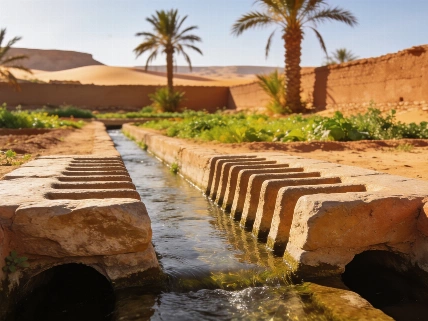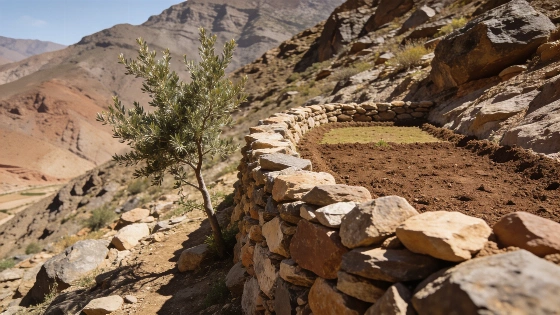
Morocco's renewable water availability has fallen close to the absolute scarcity threshold. A High Atlas Foundation proposal calls for mountain terraces to slow runoff and support rural farming.
Morocco's renewable water availability has fallen from around 2,500 to 2,600 m³ per person in the 1960s to an estimated 600 to 620 m³, close to the absolute scarcity threshold of 500 m³ a year. Yossef Ben-Meir of the High Atlas Foundation has proposed terracing mountain slopes to retain water higher in the watershed. He describes the practice as an underused community response to the country's water crisis.
The proposal aims to slow rain and spring runoff so more water can seep into the ground, reducing erosion and extending water availability for mountain and downstream communities. It covers slopes from riparian valleys to elevated plateaus, linking water retention with additional agricultural plots. A terrace reconstruction in Aghbar municipality of Al Haouz province followed the 8 September 2023 earthquake.
Ben-Meir says the High Atlas Foundation has worked on rural development in Morocco for 26 years. He says mountain farming communities have consistently identified terracing as a priority. Traditional terraces are already part of the Atlas landscape: in the Imlil Valley, terraced fields and walnut groves sit alongside traditional Amazigh settlements.
Water pressure reaches farms and reservoirs
Morocco endured an acute, prolonged drought for roughly eight years. Conditions were particularly harsh from 2019 to 2025, depressing agricultural output, depleting reservoirs and accelerating groundwater drawdown. In 2022, the filling rate of the country's main dams fell to 32.8 percent.
Agriculture is especially exposed: 80 percent of cultivated land relies on rainfall. Ben-Meir links water stress to economic volatility and mounting pressure on small farmers. Some sold land and entered wage labour. Government frameworks include a 2016 law advancing decentralisation and community resource management, the Green Morocco Plan and the 2050 National Water Plan. Those frameworks focus on measures including dam construction and desalination, while Ben-Meir argues that regenerative approaches remain marginal in practice.
Terracing joins watershed repair to rural livelihoods
Terraces can slow runoff, increase infiltration, reduce erosion and create additional agricultural plots. Ben-Meir's proposal combines terrace construction with planting native fruit and forestry trees on mountain slopes and plateaus. The named varieties include carob, fig, argan, almond, pistachio and olive, along with oak, juniper, cedar and acacia.
Ben-Meir says mountain communities have consistently identified terracing as a priority. New plots could benefit households, with some land set aside for women's cooperatives and associations, creating opportunities for cultivation and income. The proposal is set out in Ben-Meir's terracing plan.
Ben-Meir argues the work would require compensation: mountain residents cannot afford to devote months or years to a project serving both local and national interests. He also says mountain areas above water channels are public domain under the National Agency for Water and Forests, whose 2030 strategy champions community partnership.
Morocco's infrastructure agenda also includes large projects such as the Tanger Med expansion plan. The terracing proposal instead focuses on restoring watersheds through community work. Ben-Meir points to environmental restoration efforts involving Kenya's Environmental Soldier Program and India's Ecological Task Force, where governments have mobilised organised workforces to restore degraded terrain.