

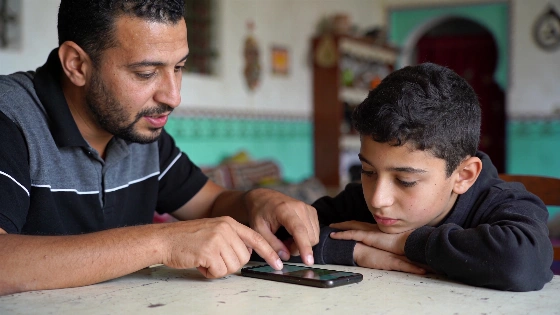
Morocco's proposal would restrict social media and dangerous electronic games for under-15s, but VPNs and age-verification hurdles could frustrate enforcement. Expert Marouane Hermach says education and family support should come first.
A study cited by Moroccan digital communication expert Marouane Hermach found that more than 70 percent of under-15s in Australia still use social media. For him, the figure shows how difficult such restrictions can be to enforce.
Morocco's government program promises legislation to protect children from harmful and unlawful uses of social media. It proposes barring under-15s from these platforms and dangerous electronic games, but the measure has not yet taken effect.
Age checks and platform use will shape enforcement
Virtual private networks can help users bypass some restrictions. Age verification poses another hurdle: Hermach says even countries with more advanced digital infrastructure struggle to put such systems in place, making enforcement especially difficult for Morocco.
He cited Australia as a pioneer in restrictions and said the study's finding points to enforcement difficulties. The United Arab Emirates, he added, "have managed to enforce the ban partially", though there is little transparency about how those restrictions work.
Hermach says legislation's effectiveness will depend on governments' ability to pressure the companies that own the platforms. He points to the European Union and Australia, where the size of the markets and the revenue platforms earn give regulators use to push companies to take them seriously.
A separate cyber readiness report described gaps in Morocco's wider digital preparedness. Hermach's proposal addresses children's online access specifically, while placing part of the responsibility on the platforms themselves.
Schools and families are the proposed starting point
Hermach recommends restricting phone use in schools, including high schools, before moving toward a wider ban. He described the government program's proposed restriction in basic schools as "an encouraging point".
The program also proposes a "National Program for Digital Childhood" with gradual, age-appropriate access to digital technology. It calls for stronger digital education in school curricula and tools to help parents guide and monitor children's use. A "child-friendly digital space" label is also part of the plan.
Hermach wants a national awareness campaign to help families understand the risks children face online and use parental controls. He says a gradual transition over two or three years would give families time and support to guide their children.
He argues that platforms do not sufficiently uphold ethical safeguards despite directing a large part of their activities toward this age group. In his view, stronger oversight by the companies themselves would reduce the need for governments to legislate restrictions on access.







