

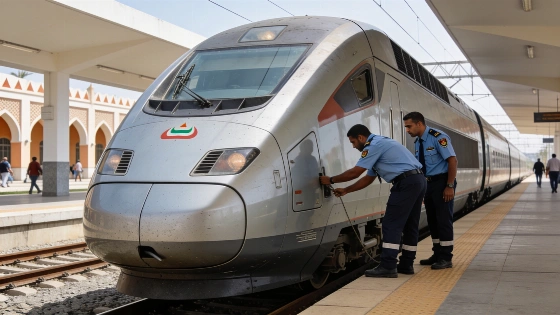
Morocco has clinched €405 million in African Development Bank financing to overhaul the Kenitra-Marrakech rail corridor and launch a five-year vocational training lead targeting 260,000 young people without diplomas.
Morocco has signed a €405 million financing agreement with the African Development Bank (AfDB) to upgrade its rail network and expand vocational training. Signed in Rabat on 17 September 2026, the deal allocates €205 million to railway infrastructure and €200 million to the "Cap Compétences 2030" training programme, information from the Moroccan Ministry of Economy and Finance and the official news agency MAP.
The rail investment will focus on the Kenitra-Marrakech corridor, a basic route for national and regional logistics. Plans include extending the high-speed rail line and upgrading existing tracks to raise capacity and efficiency. The government recently declared the Marrakech-Agadir high-speed line and Chichaoua-Essaouira section a public utility under decree No. 2.26.605, published 7 September 2026. The Ministry of Transport says the upgrades will help position Morocco as a logistics hub for North Africa and the MENA region, an objective also recognised in the African Union's infrastructure agenda.
Alongside the rail project, the €200 million "Cap Compétences 2030" programme will run for five years. It aims to broaden vocational training and digitise its delivery, while developing apprenticeships and improving job placement systems. The first phase targets 260,000 young Moroccans without diplomas, with support from ANAPEC and the Taehil programme. The Ministry of Economic Inclusion, Small Business, Employment and Skills, led by Younes Sekkouri, has highlighted the programme's role in tackling youth unemployment and improving women's access to work, in line with national priorities and recommendations from the UN Economic Commission for Africa (UNECA).
Fouzi Lekjaa, Minister Delegate for the Budget, called the high-speed rail project a source of national pride, citing its impact on jobs and infrastructure. Achraf Tarsim, AfDB's representative in Morocco, said the investments should create new opportunities and strengthen the country's position as a development leader in Africa. The AfDB has worked with Morocco since 1978, providing over €15 billion for more than 150 projects spanning water and agriculture, as well as energy and human development, information from Hiba Press and AfDB statements.
The financing comes as Morocco steps up efforts to modernise infrastructure and address youth unemployment. Upgrading the Kenitra-Marrakech corridor forms part of a broader push to reinforce the country's logistics network, while the training programme aims to narrow gaps in youth and women's employment. These moves reflect targeted investment in Morocco's economy and society, as reported by MAP and other regional outlets.
If these projects succeed, Morocco's model could influence development finance and regional integration across North Africa, a view also noted by Tunis Afrique Presse (TAP) in its economic reports.







