

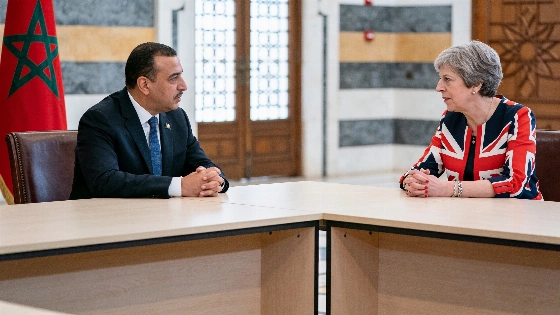
At an October 27 meeting, Mohammed El Habib Belkouch and Theresa May discussed cooperation against trafficking, covering prevention and business accountability as well as Morocco's potential role in regional action.
The Interministerial Delegation for Human Rights links Morocco's international reporting to questions about business conduct and sport. On October 27, 2026, its head Mohammed El Habib Belkouch met Theresa May to discuss cooperation against modern slavery and human trafficking.
May, a former British prime minister and chair of the Global Commission on Modern Slavery and Human Trafficking, said Morocco could help build regional momentum. The discussion covered prevention and the sharing of expertise.
Prevention beyond criminal enforcement
Morocco's approach pairs early risk identification with criminal enforcement. Vulnerabilities can emerge in recruitment and employment, then extend through complex commercial supply chains. In an October 22 statement to the Organization for Security and Co-operation in Europe, UK Chargé d'Affaires and Deputy Ambassador James Ford described human trafficking as a direct security concern, linking it to organized crime and illicit profits, as well as cybercrime, financial crime and drug trafficking.
The UK statement identified conflict and climate change as factors that can increase vulnerability, particularly among children. Worsening humanitarian crises can add to those risks. It also highlighted deceptive recruitment and online platforms as tools used by criminal networks, while noting that digital activity and virtual assets can help investigators identify victims and trace proceeds. The British government has emphasized victim-centered protection, cross-border cooperation and the use of digital and financial investigations, as set out in its statement to the OSCE.
The delegation contributes to international reports submitted within the United Nations human rights structure. Its work on business and human rights, as well as sport and human rights, reflects an effort to bring those standards into economic activity and major projects. The UK Government Office for Science reported on October 27 that the Office of the Independent Anti-Slavery Commissioner had commissioned a strategic futures analysis of how modern slavery and human trafficking could evolve over the following decade. The analysis identified online-enabled sexual exploitation, gig-economy exploitation, visa-related exploitation and the exploitation of vulnerable adults among emerging threats.
Human rights in major projects
That agenda will grow more relevant as Morocco prepares to co-host the 2030 FIFA World Cup. Major sporting events can increase pressure on labour markets and procurement systems. They can also strain public services and infrastructure development, making worker safeguards and institutional oversight relevant to project planning.
Integrating human rights standards into development is a practical test of business accountability. Maghreb Insider has also discussed Morocco's wider diplomatic priorities in its global strategy report.
Cooperation and implementation
The Commission brings together government representatives, civil society and business leaders, along with experts and people with lived experience of exploitation. Survivor participation can help shape protection measures around the realities of trafficking and modern slavery.
May expressed readiness to pursue bilateral cooperation with Morocco. The discussion also pointed to prevention and institutional responsibility as priorities for future work. In the United Kingdom, the Crown Prosecution Service includes modern-slavery offenses among the categories monitored in its quarterly records of pre-charge and prosecution outcomes.







