
Mauritania's Ministry of Hydraulics reports that Nouakchott's water production has remained at normal levels, even as river water turbidity reached record highs in August, highlighting the resilience of the Aftout Sahli system during peak seasonal challenges.
The Ministry of Hydraulics in Mauritania has confirmed that water production for Nouakchott has remained stable, despite a significant increase in turbidity levels in the river supplying the city. The announcement comes after several weeks of elevated turbidity, a common seasonal challenge during the late summer period.
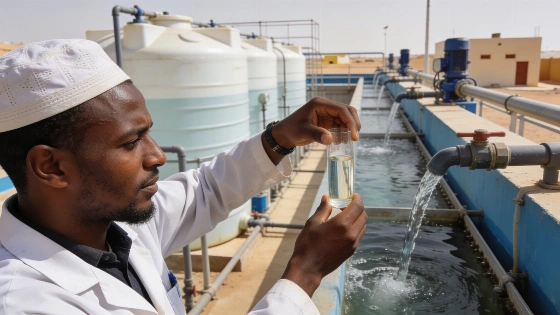
According to the ministry, the Aftout Sahli system, which provides the bulk of Nouakchott's water, maintained its usual output even as turbidity at the water intake point exceeded 1,000 NTU units from 21 July and peaked at 4,568 NTU on 8 August 2026. The ministry noted that these levels represent the highest recorded this year, with turbidity only recently stabilising at 1,780 NTU.
Water Production Maintained at Maximum Capacity
Despite the challenging water quality conditions, the ministry stated that daily production remained between 147,000 and 150,000 cubic metres, matching the system's maximum capacity. This continuity is critical for Nouakchott, which relies heavily on the Aftout Sahli network for its urban water needs.
Seasonal Turbidity and Infrastructure Resilience
The period from late July to the end of August is typically marked by high turbidity in the river, driven by seasonal factors. The ministry's statement underscores the resilience of the city's water infrastructure in managing these fluctuations without service disruption. No immediate changes to water supply or quality standards were announced, but the ministry continues to monitor the situation closely.