

In Meknes, some young people leave school for insecure jobs while others work before class or at dawn to pay for basic needs. Rural transport gaps and pressure to support family members shape their decisions.
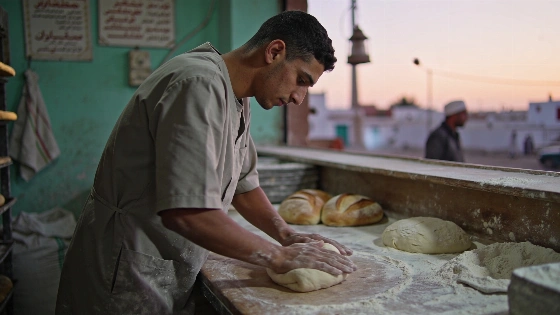
At 5 a.m., Oussama*, a 25-year-old Arabic student in Meknes, sometimes sets out to deliver bread before returning to his studies. He also works as a bakery cashier to cover basic expenses and pay for his education.
His routine points to a wider struggle. Young people who move to Meknes for work or study describe leaving school because they could not cover living costs or get to classrooms in remote areas. Others keep studying while taking jobs that exhaust them and eat into time for lectures and campus life.
Morocco's High Commission for Planning (HCP) reported a 10.5% strict unemployment rate nationally in the third quarter of 2026, while the rate among people aged 15-24 stood at 30.5%. The labour force numbered 11.7 million, with 10.5 million people in paid employment, 173,000 fewer than in the previous quarter. HCP's third-quarter labour report also put composite labour underutilization among 15-24-year-olds at 44.5%.
When the journey to school becomes unaffordable
Rural access to school transport has expanded, according to education expert Abdennasser Naji: the share of rural students benefiting from it rose from about 10% in 2015 to more than 80% in 2024. Yet access remains a barrier for some. Brahim*, 25, left middle school after his school was moved about 12 kilometers from his village, Wlad Ktir, and no dedicated transport was available. "So, there was no school," he says.
His father paid for public transport, but Brahim says he knew the fares strained his family. In 2018, he left school and went to Casablanca to work in a bakery. The job later took him to Tangier, with stops in El Hajeb and Meknes. He says his father now relies on his earnings and no longer takes paid work.
Omar*, 20, left high school and earns around 150 dirhams a day as a bakery assistant. He says family members expect him to send money regularly. "Once you stop working, no one can support you. You have to shoulder your own responsibilities, on top of the demands placed on you by your family," he says. Although he would like to return to school, he worries about giving up the income he has come to depend on.
Work carries into the classroom and the home
For Oussama, work is a way to meet basic needs while pursuing a degree. Naji, president of the Moroccan Association for the Improvement of Teaching Quality (AMAQUEN), says students from disadvantaged backgrounds are often forced to work for food and housing. He says gruelling jobs can take up so much time that academic performance suffers.
Ilyas*, a 20-year-old history student from Moulay Bouazza, describes work as a source of independence and social integration, while saying it sometimes prevents him from attending lectures or taking part in student life. Oussama is in his third year at the Faculty of Letters and Humanities and must complete an undergraduate thesis on the emergence of the theater of the absurd in Morocco. He hopes to find stable employment after graduating.
Paid work begins early for some. Omar says he went with merchants to weekly souks as a child, helping set out and sell goods. Abdallah*, 20, who comes from the same village, says he was doing hard labor at 12 or 13. Both cite the COVID crisis and the strike by contract teachers. Lack of school transport and money for education also contributed to their leaving school.
Family expectations shape girls' options differently. Brahim says one sister had to stay home to care for their sick mother, while two sisters were married. He expects his 13-year-old sister to stop attending classes after sixth grade because, in his view, traveling to middle school with boys would put her at risk. Omar says he is expected to carry a heavier financial burden as the only son. The first names used here have been changed.







