

A report presented in Madrid says phosphate and fisheries projects, together with farming and transport links, fold Western Sahara into Morocco's economy, sideline Sahrawis and make decolonisation harder.
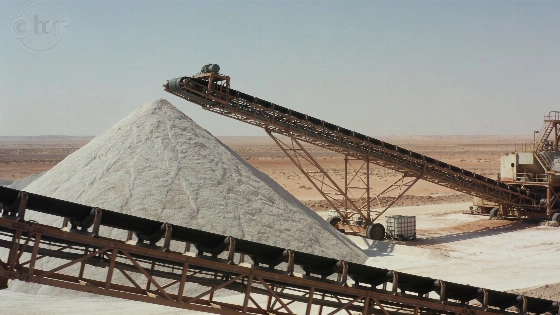
The report names Bou Craa phosphate and Dakhla Bay fisheries as economic pillars of Moroccan control. It also points to groundwater-intensive farming and renewable energy projects, alongside the Dakhla Atlantic Port, a planned multi-use facility for commercial shipping, fisheries, industry, logistics and ship repair.
Presented in Madrid on Monday, "Tourism in the Context of Occupation: Dakhla from Military Base to Pearl of the Desert," was coordinated by the Sahrawi Working Group on Natural Resources and Related Legal Issues. The report argues that these projects are reshaping the territory's economy and demographic field.
Infrastructure and resource extraction
The report argues that airports and roads are built chiefly to move resources for export and encourage Moroccan settlement, rather than to meet Sahrawis' development needs. It says Sahrawis are marginalised and denied the chance to benefit from their territory's resources.
The report also identifies air connections, particularly Ryanair flights, as a way to integrate Dakhla into Morocco's commercial system. Moroccan investment reporting says the Dakhla Atlantic Port is intended to expand trade and logistics links with West Africa and the Sahel. Construction had exceeded 74% by the end of September 2026. The Dakhla-Oued Eddahab Regional Investment Center has put the project cost at MAD 15.06 billion, with completion targeted for the end of 2028 and operations expected in 2029. The reported plan places the port within a wider investment lead covering renewable energy, green hydrogen, logistics and marine-resource processing.
Western Sahara remains on the United Nations list of Non-Self-Governing Territories. In its 16 October 1975 advisory opinion, the International Court of Justice found that the evidence before it did not establish ties of territorial sovereignty with Morocco or Mauritania capable of overriding the Sahrawi people's right to self-determination. Morocco's trade diplomacy is also covered in an earlier trade report on ties with Senegal and the DRC.
Legal concerns and the report's appeal
The report says resource exploitation and changes to the territory's demographic and economic field violate international humanitarian law. That is the report's legal assessment. In a separate ruling on 4 October 2024, the Court of Justice of the European Union held that EU-Morocco agreements covering Western Sahara had been concluded without the valid consent of the Sahrawi people. It reaffirmed that the territory is distinct from Morocco for EU-law purposes. The court distinguished the people of Western Sahara from the territory's current residents, noting that a significant proportion of the Sahrawi people live outside the territory. Its ruling is set out in the EU court decision.
The court stated that consent could be inferred only under specific conditions, including when an agreement imposed no obligations on the Sahrawi people and delivered a specific, tangible, large and verifiable benefit proportionate to the exploitation involved. The judgment sets out a legal structure relevant to commercial agreements and projects involving fisheries, agriculture and other resources in Dakhla.
The report urges governments and multinational companies to stop supporting extractive projects and ensure economic activity respects the Sahrawi people's right to self-determination and sovereignty over natural resources.







