Kpler estimates show Russian refined-fuel deliveries to Libya down about 91% in 2026. Italian-linked refineries supplied roughly 59,000 bpd, with Trafigura and Vitol shaping the route.
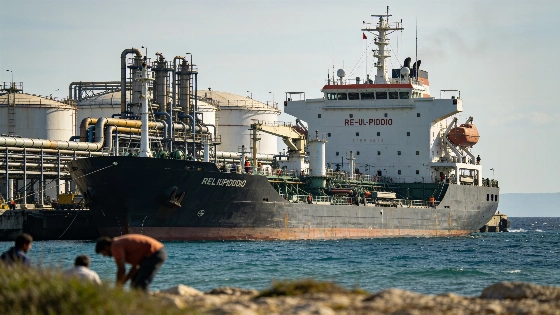
Libya imports more than 150,000 barrels per day of refined products because domestic refining falls short, leaving tender awards to determine who fills the gap. Kpler estimates put Russian deliveries at about 5,000 bpd in 2026, down from roughly 56,000 bpd in 2024 to 2025.
Italy supplied about 59,000 bpd, close to the volume Russia previously delivered. The figures come from tanker-tracking estimates, not audited customs records. The shift reflects a change in National Oil Corporation (NOC) procurement under sanctions pressure, with commercial control concentrated among traders linked to two Italian refineries.
NOC tenders shifted the supply channel
Reuters reported Kpler's estimates on 18 February 2026. The figures track tanker movements rather than audited customs data, comparing a 2024 to 2025 level with 2026. Kpler estimated Russian refined-product volumes fell about 91%. The figures are directional, but the scale of the decline is clear.
Italy's Foreign Ministry reported that bilateral trade reached €5.7 billion in the first half of 2026, up 43.4% year over year. Italian exports to Libya rose 92.7% to €1.697 billion, from €881 million in the first half of 2025. Italy accounted for 17% of Libyan imports and 23.4% of its exports, according to the Italian Foreign Ministry's figures.
Italian Trade Agency figures show Italian exports to Libya rose 101.3% to €2.033 billion in January to July 2026. Refined petroleum accounted for 58.8% of those exports, and Italy supplied about 17% of Libyan imports. The two countries' bilateral trade reached nearly €6.8 billion, up 44.9% over the same seven-month period.
Italy has long been a buyer of Libyan crude oil and gas. In 2025 it took 22.4% of Libyan exports and was the country's biggest customer. Its growing role as a fuel supplier is a separate development.
Sanctions-related checks on Russian-origin cargoes cover documentation, vessel ownership, insurance, payments and proof of origin. Early-2026 NOC tenders went to Vitol, Trafigura and TotalEnergies, giving the corporation a broader supplier pool. Traders can source gasoline and diesel from Mediterranean refineries, including Italian facilities.
Reuters, citing trading sources, reported that Vitol won rights to deliver five to ten gasoline cargoes a month, as well as diesel in undisclosed quantities. Volumes awarded to Trafigura and TotalEnergies have not been disclosed. NOC's payment terms are also unpublished.
Italian refineries are the physical link
"Italian supply" describes where fuel is refined; trading houses shape how it is sold and where it goes. Under feedstock and offtake agreements, traders can supply crude to a refinery and take a set share of its finished output. That lets them respond quickly when NOC awards a tender.
At ISAB in Priolo, capacity is about 320,000 bpd. Trafigura is tied to the refinery until 2033, supplies its crude and takes about 90% of output. ISAB processed 10.8 million tonnes of crude in 2025, below its nameplate capacity, according to La Sicilia.
ISAB completed court-supervised crisis negotiations in February 2026 after financial strain linked to its change of ownership from Lukoil to GOI Energy. Ludoil agreed to buy 51% from GOI Energy, and Italy's competition authority cleared the deal in August 2026. Ludoil has announced a planned investment of about €1.3 billion over five years; the agreement and clearance do not establish that the purchase or investment has been completed.
The other main route runs through Sarroch/Sarlux in Sardinia, a refinery with about 300,000 bpd of capacity. Vitol acquired Saras in 2024, later took full ownership and delisted the company. Saras reported that it bought no Russian-origin crude, semi-finished or refined products in 2025.
Domestic refining efforts form part of the wider picture: a report on Brega covered Sirte Oil Company's refinery restart. Kpler estimates that Libyan transport-fuel demand can reach 250,000 bpd, while local refining still leaves more than 150,000 bpd of refined products to be imported.
Supply concentration leaves risks in place
The procurement change reflects NOC's shift in counterparties and the added compliance requirements for Russian supply. Cargo volumes remain sensitive to refining margins and freight rates, and political disruption can also affect flows. Contract lengths and pricing formulas have not been disclosed, limiting what can be established about the arrangement's durability.
Libya's subsidised fuel market creates another vulnerability. The International Crisis Group puts gasoline at about $0.02 per litre in Libya, against roughly $2 in Europe. The state pays for imports in hard currency and sells fuel at a steep subsidy, creating an incentive for cargo diversion. Higher estimates of smuggling losses attributed to The Sentry have not been independently confirmed.
Kpler reported that the Waha Oil dispute and related pipeline shutdowns threatened crude flows, exports and the Zawia refinery. An interruption could increase import needs while supply is heavily routed through two Italian-linked plants. Separately, products can be blended, re-exported or traded through intermediaries, so a decline in cargoes identified as Russian does not prove Russian-origin molecules have left the Mediterranean.