
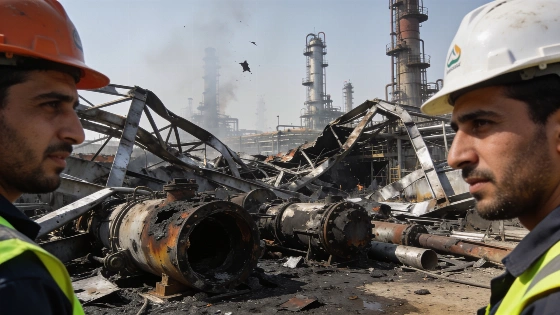
The US wants to set up a $5 billion fund to help fix Middle East energy infrastructure after the US-Israeli war on Iran. Saudi Arabia and the UAE have been approached, but the region faces tens of billions in damage.
Oil and gas sites across the Middle East are in ruins after the US-Israeli war on Iran. Refineries, pipelines, and export terminals took some of the worst hits. Now, the US is trying to pull together a $5 billion fund to help rebuild these vital energy assets. If it goes ahead, the plan could change how the region's energy sector recovers. But for now, it's just a proposal. Reuters reports that talks are ongoing, with no firm commitments from any country. The scale of the damage and the politics involved make recovery slow and uncertain. The challenge for energy exporters is huge, as detailed by Reuters.
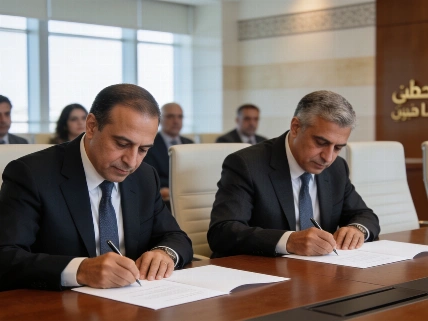
Reuters, citing the Wall Street Journal, says the Trump administration has started talks with Saudi Arabia and the United Arab Emirates about how the fund would work and who would join. Nothing is set. There's no timeline, and the countries involved haven't made any promises. The fund would not only repair oil and gas sites but also try to cut the region's reliance on the Strait of Hormuz, a key route for energy exports that has seen repeated flare-ups.
Repair costs for energy sector run high
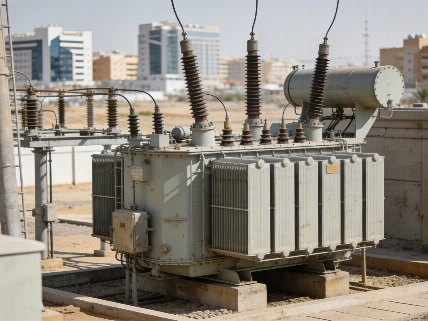
Estimates from April put the total bill for fixing energy infrastructure in the Middle East at up to $58 billion. Oil and gas sites alone could need $50 billion. Saudi Arabia's energy sector has been hit again and again. On September 11, drone strikes forced the East West Pipeline to shut down for a time, and the kingdom had to reroute crude exports. Earlier attacks had already disrupted oil, gas, refining, petrochemical, and power plants in Riyadh, the Eastern Province, and Yanbu. The Saudi Press Agency and the Ministry of Energy say damage assessments are ongoing and that international help is needed to get back to full capacity.
Qatar's Ras Laffan complex was also hit in Iranian attacks in March. Two of its fourteen LNG production trains and a gas-to-liquids plant were damaged. In response, Qatar has started talks with US LNG producers for multi-year supply deals through 2031. This shows how the fallout is spreading into global energy markets. The Tunis Afrique Presse agency reports that North African exporters like Algeria and Libya are watching closely. Disruptions in Gulf supply chains have often led to changes in Mediterranean export volumes and prices.
UAE and neighbors face shutdowns
The UAE has also suffered. Major sites like the Ruwais refinery, Habshan gas facility, Shah gas field, and Fujairah port have all faced shutdowns. These problems have made the need for joint reconstruction efforts more urgent. But there's still no clear deal on the US fund or who will join. The Algerian Press Service says Maghreb energy ministries have been briefed on the US plan through diplomatic channels. As of late September 2026, no formal invitations or offers to co-finance have gone to North African states.
The US proposal shows a willingness to help pay for the region's recovery. But the damage is massive, and regional politics are complicated. Money alone won't be enough. It will take more than promises to rebuild. In the months ahead, it will become clear if the US can turn its idea into a real joint effort, or if Middle Eastern energy sites will have to recover with only limited outside help. For now, the future of the region's energy sector depends on these tough negotiations and whether regional powers are ready to commit real resources to fix what war has destroyed. For more updates on regional energy diplomacy, readers can check the Moroccan state news agency for official statements and sector news.