
The central banks of Morocco and the UAE signed two memoranda on October 3, 2026. They set out work on supervisory cooperation, Islamic finance and possible payment links, but do not connect the countries' payment systems.
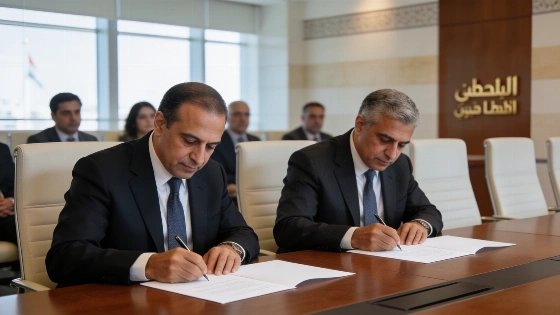
At the Central Bank of the UAE's headquarters in Abu Dhabi, officials from Morocco and the UAE signed two memoranda on October 3, 2026. The agreements set out work to explore links between payment platforms and financial messaging systems. More efficient cross-border transactions are among the stated aims. The systems are not connected yet.
The signatories were Bank Al-Maghrib governor Abdellatif Jouahri and Central Bank of the UAE governor Khaled Mohamed Balama. Jouahri said the memoranda provide a basis for stronger institutional cooperation and more efficient financial operations. He also pointed to the potential role of central bank digital currencies in payments between Morocco and the UAE, as Morocco World News reported.
One memorandum covers the exchange of supervisory information on banks and financial institutions. It also calls for coordination on prudential rules and practices, along with sharing expertise to build institutional capacity. The agreement provides for closer coordination between Sharia governance bodies and for developing Sharia-compliant cross-border financing, particularly for trade and infrastructure investment. That work reaches beyond payment technology.
The second memorandum sets out plans to explore links between instant-payment platforms, domestic card-processing systems and financial messaging systems. The parties may assess cross-border processing and settlement, along with possible mutual acceptance of domestic payment cards. Any such work remains subject to both countries' regulatory requirements. Nothing is live yet. The memorandum describes areas for assessment, not systems that are already interoperable or cards that are already accepted across borders, as Emirates Today reported.
The agenda also includes sharing expertise on retail and wholesale central bank digital currencies and their possible use in cross-border payments. It covers financial technology, rules for crypto-assets and stablecoins, and consumer protection. These subjects put the work of Bank Al-Maghrib and the UAE central bank within broader regulatory questions about the digitalisation of financial services.
Morocco's wider technology agenda has included a national AI strategy. These memoranda, though, focus on financial cooperation. Their immediate aims are supervisory coordination, Islamic finance and an assessment of whether payment infrastructure can be better linked under each country's rules.
Balama said the cooperation would include sharing supervisory expertise, developing Islamic finance solutions and exploring stronger links between payment systems. He said the work would support economic and trade relations. The two central banks have set a framework for future coordination, not launched a live cross-border payment network.
For businesses and consumers, any benefit depends on further technical work, regulatory decisions and implementation by Bank Al-Maghrib and the UAE central bank. The memoranda create a path for that work. They do not guarantee faster transfers, lower costs or immediate card use in both markets.