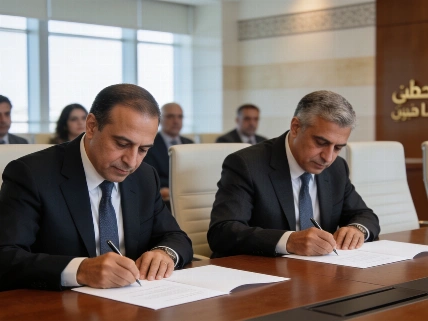

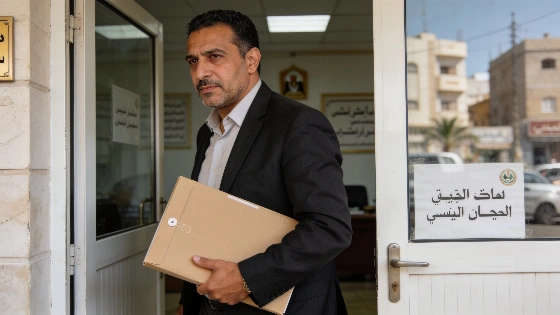
Libya's Ministry of Economy and Trade wants companies and traders to disclose their activities and submit audited financial statements. The ministry says reliable records should guide assessments of hard-currency and letter-of-credit needs as the dinar and foreign reserves face pressure.
In the first four months of 2026, letters of credit were the largest channel of official foreign-currency demand in Libya. Personal-purpose transactions, remittances and traders' cards were also among the channels, according to an analysis citing Central Bank of Libya data.
Circular No. 6 of 2026 sets out the Ministry of Economy and Trade's approach to assessing companies' demand for hard currency and letters of credit. The ministry says those requests should rest on verifiable financial records, not estimates or isolated assessments of individual businesses. It urges companies, establishments and traders to disclose their activities and submit financial statements under applicable legislation.
The ministry says the policy is meant to prevent letter-of-credit fraud, protect the value of the Libyan dinar and limit the depletion of hard-currency reserves. The circular sets an evidentiary standard. It does not show that fraud has been prevented or reserves protected.
Audited records sit at the heart of that standard. The ministry says decisions about business entities' needs and economic regulation should rely on actual financial data certified by an external auditor and submitted to competent authorities, primarily the Tax Authority. That is the standard.
The wider fiscal picture also matters. The IMF's Article IV mission, held from March 30 to April 8, 2026, warned that persistent fiscal deficits and high public spending put pressure on the exchange rate, reserves and inflation. Without fiscal adjustment, the IMF said, reserves could fall to critically low levels over the medium term. Exchange-rate measures alone would not resolve the underlying imbalance.
The IMF also described a trade-off in limiting private-sector credit. Restrictions can ease pressure on the foreign-exchange market and help preserve reserves. But they can also constrain banks' ability to support businesses and investment. Better company-level financial information may help authorities assess requests more consistently. The circular does not claim that disclosure alone can ease Libya's broader fiscal or currency pressures.
Foreign-exchange regulation remained active later in 2026. On September 30, the Libyan News Agency (LNA) reported that the Central Bank of Libya had introduced a new classification of letters of credit to regulate imports and monitor the market. The report did not detail the categories or how they would be applied. It offers context on the wider regulatory environment, but does not establish a direct link to Circular No. 6.
A day earlier, on September 29, the Central Bank announced the issuance of 2026 No. 32 unrestricted mudaraba deposit certificates for commercial banks to subscribe to under previously used procedures and controls. The Central Bank's notice did not connect the certificates to the ministry's disclosure circular. The two measures are separate.
The same ministry has also handled company-entry approvals, as noted in an earlier approvals report. This circular deals with a different matter: the financial information authorities should use to assess companies' activities and currency needs.
The ministry wants authorities to rely on disclosures and auditor-certified statements, rather than estimates or case-by-case assessments detached from comparable data. The circular sets no submission deadline. It also specifies no penalties or enforcement process, so those details cannot be assumed.
For businesses, the immediate instruction is to disclose their activities and submit auditor-certified accounts through the prescribed authorities. The policy's value will depend on whether companies submit reliable statements and authorities use them consistently. A standard, not a proven result.
As reported by the LNA and stated in Central Bank notices, Libya has also been adjusting its tools for managing import-related foreign-currency demand. Those steps sit alongside the fiscal adjustments the IMF said were needed to ease sustained pressure on the dinar and reserves. They do not replace them.