

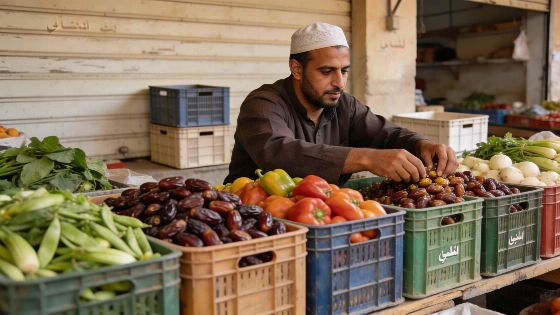
Libya's Ministry of Economy and Trade has barred exports of agricultural goods except dates and locally produced food until domestic markets stabilize. The measure also blocks re-exports of imported goods, with no public timetable for lifting the restrictions.
Decision No. 493 of 2026 sets out the restrictions imposed by Libya's Ministry of Economy and Trade. Dates are exempt from the ban on agricultural exports.
The rules also stop exports of locally produced food until domestic market conditions stabilize. Re-exports of all imported goods and products are barred too. Dates remain exempt.
The ministry says the measures will help it monitor market conditions, meet consumer needs and keep essential goods available. The decision covers three areas: agricultural exports other than dates, locally produced food exports, and re-exports of imported goods and products.
There is wider concern about food availability and prices. On September 30, Libya Review reported that the Government of National Unity had exempted imported food products from some taxes and fees. That report offers context for domestic-market measures, but it does not independently confirm the export restrictions.
The government has also kept up economic contacts abroad. The Libyan News Agency, known as LANA, has reported on official economic contacts with foreign partners in Tripoli. Those reports show a parallel effort to attract cooperation. They do not confirm the terms or enforcement of Decision No. 493.
The export measure takes a different approach. It restricts goods from leaving the local market.
The ministry has also handled measures to let foreign operators enter Libya or change their activities, including the company approvals. These steps point to separate strands of economic policy: encouraging business ties with foreign partners while prioritizing domestic supply in the product categories covered by the decision.
For producers and traders, the scope is broad. The rules cover nearly all agricultural goods, locally made food and re-exports of imported products. Domestic availability takes priority over export access for now. The practical effect will depend on implementation and market conditions.
That timing remains unclear. As of the latest materials reviewed, including recent LANA coverage, no separate official announcement canceling or easing the restrictions had been identified. Public reporting gives no calendar end date, no criteria for deciding when markets have stabilized, and no detailed account of how the rules will be enforced. The food-export restriction depends on local conditions stabilizing, but the decision does not explain how officials will assess that threshold.