
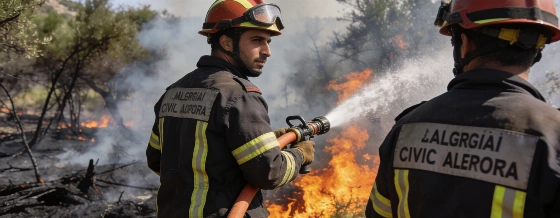
Algeria's Civil Protection services report 29 wildfires still active across 15 wilayas, with the government deploying aerial support and emergency teams. The situation remains critical, especially in the east and north, as authorities focus on containment.
Algeria is facing a renewed wildfire emergency, with the Civil Protection authority confirming that 29 fires remain active across 15 wilayas as of 13:00 on 28 August 2026. The situation is particularly acute in the eastern and northern regions, where local authorities and emergency services are working to contain the spread and limit further damage to agricultural and forested areas.
On Friday, Prime Minister Sifi Ghrieb, representing President Abdelmadjid Tebboune, attended the burial ceremony for victims of the recent wildfires in Jijel. The funeral, held at Dar El Baqa cemetery in Djemaâ Beni Habibi, drew grieving families, local officials, and citizens who gathered to express solidarity and support. The event underscored the human toll of the fires and the ongoing challenge for communities in affected areas.
Government Response and Aerial Support
According to the latest update from Civil Protection, a total of 97 wildfires have been recorded nationwide since the start of the crisis, with 68 now extinguished. The remaining 29 active fires are concentrated in wilayas such as Skikda (5), Guelma (4), and Béjaïa (3), with additional outbreaks in Jijel, Annaba, Mila, Souk Ahras, Tizi Ouzou, and several others. The government has mobilised aerial firefighting assets, including four AT-802 aircraft in Jijel and a BE-200 water bomber in Skikda, to reinforce ground teams. In Béjaïa and Guelma, operations continue with the support of additional aircraft, as authorities prioritise areas where the risk of spread remains high.
Prime Minister Sifi Ghrieb paid tribute to the victims, offering condolences to their families and wishing a swift recovery to the injured. He also called for continued vigilance and resilience, emphasising the need for coordinated action to protect lives and property.
Regional Impact and Ongoing Risks
The fires have affected a range of landscapes, including forests, agricultural fields, and palm groves, raising concerns about long-term environmental and economic consequences. In Mila, Tizi Ouzou, and Tébessa, firefighting teams are focusing on isolated outbreaks, with aerial support deployed where ground access is limited. The persistence of high temperatures and dry conditions has complicated containment efforts, prompting authorities to maintain heightened alert levels.
As Algeria confronts these challenges, the situation is being closely monitored by both national and regional observers. The country's response to wildfires is part of a broader pattern of climate-related risks affecting North Africa, as highlighted in recent coverage of security and emergency developments in the region, such as the Malian army's operations against armed groups.
With operations ongoing, authorities are urging the public to remain cautious and to cooperate with emergency instructions. The coming days will be critical in determining whether the fires can be fully contained and the extent of the damage to Algeria's natural and agricultural resources.