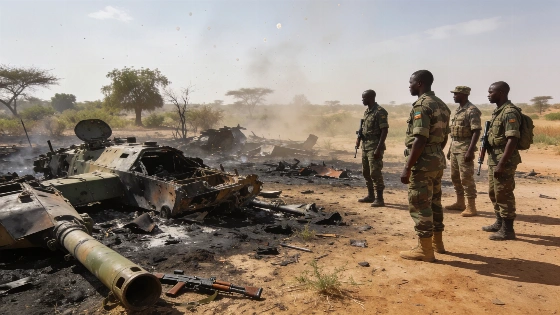
The Malian army says it carried out airstrikes on gatherings of armed groups near Mopti and Dioula, killing several fighters and destroying military equipment. The operation highlights ongoing security challenges in central Mali.
The Malian armed forces said they carried out airstrikes on Thursday against gatherings of armed groups in the regions of Mopti and Dioula. The army reported that the strikes killed several fighters, including group leaders, and destroyed military equipment. It gave no precise casualty figure.
In its official statement, the army said the operations targeted several assembly points west of Ywaro in the Mopti region. Intelligence had identified the locations as sites hosting armed leaders and impressive quantities of military materiel.
Large Armed Group Detected Near Dioula
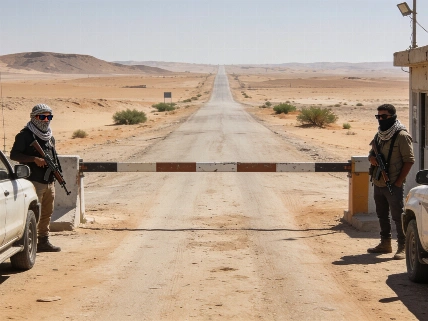
Near Dioula, in the Dandogo area, Malian forces reported identifying a group of at least 200 fighters, including leaders, who were trying to hide in dense vegetation. The army said the group had military equipment and logistical resources.
The strikes reportedly caused large damage and destroyed several pieces of equipment. The army said surveillance operations were continuing to assess the results.
Security Implications for Central Mali
The operation comes amid intensified fighting and a broader rise in air operations by Malian forces and Russia-linked Africa Corps. Human Rights Watch (HRW), citing Armed Conflict Location & Event Data (ACLED), reported 49 airstrikes by Malian forces and the Africa Corps between April and August 2026, with 89 civilian deaths recorded. In the same months of 2025, ACLED recorded 22 airstrikes and 44 civilian deaths.
ACLED also recorded 268 civilians killed by Malian forces and 134 by the al-Qaeda-linked Jama’at Nusrat al-Islam wal-Muslimin (JNIM) from April to August 2026. The figures show the threats civilians face from state forces and armed groups, as the military continues its campaign against armed-group positions.
Separate incidents documented by HRW offer context for scrutiny of air operations in the region. The organisation reported that a drone strike near Guélédié in Mopti on 16 September killed eight men and injured at least six. Witnesses said the men had gathered to access satellite internet; HRW also reported that armed fighters linked to al-Qaeda were allegedly present in the village. In a statement the following day, the Malian armed forces’ chief of staff said troops had identified and struck what the military described as terrorist elements and equipment.
HRW said its investigation involved interviews with 30 people, including community leaders, journalists, activists and a Malian soldier, conducted between 30 July and 20 September 2026. It described two other documented drone attacks as “two apparently indiscriminate Malian military drone attacks.” The organisation has also reported civilian deaths and injuries in other incidents, including an August strike on a market in Tombonkore that killed six civilians and injured at least 20, and a July strike that partially destroyed a health centre in Talhandak.
International humanitarian law requires parties to distinguish civilians from combatants and prohibits indiscriminate attacks or attacks without a military objective. HRW has said that attacks failing to distinguish between civilians and military targets are unlawful. The army’s announcement sets out its account of the targets and results of the Mopti and Dioula operation; reported civilian tolls from other operations add to the wider security and humanitarian context.
The army’s announcement was reported by saharamedias.net.